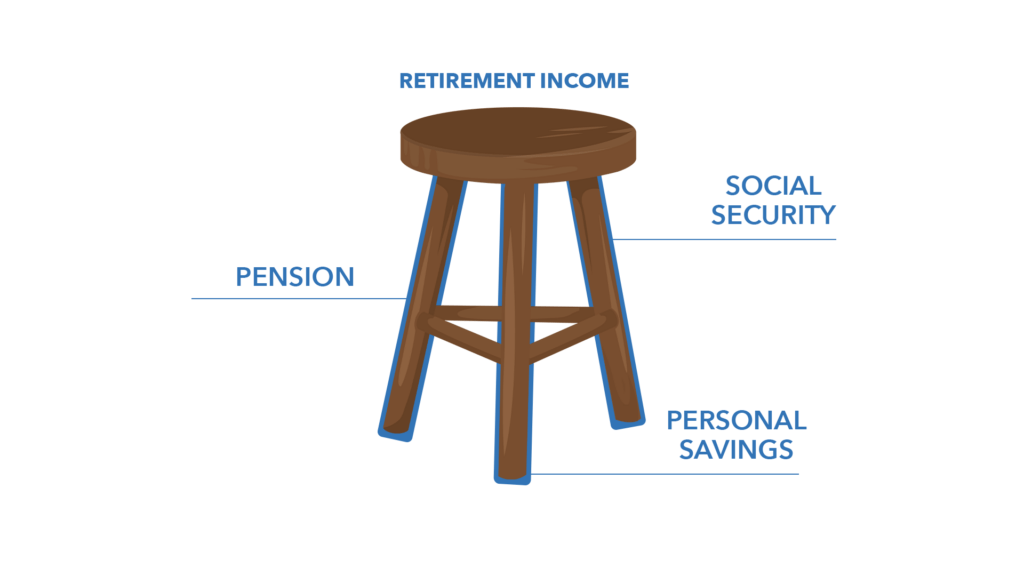
This blog explores how retirement planning has evolved from the traditional “three-legged stool” of Social Security, pensions, and personal savings into a more complex process that requires greater focus on income planning, tax diversification, and long-term financial balance.
The Decline of the Traditional Retirement Model
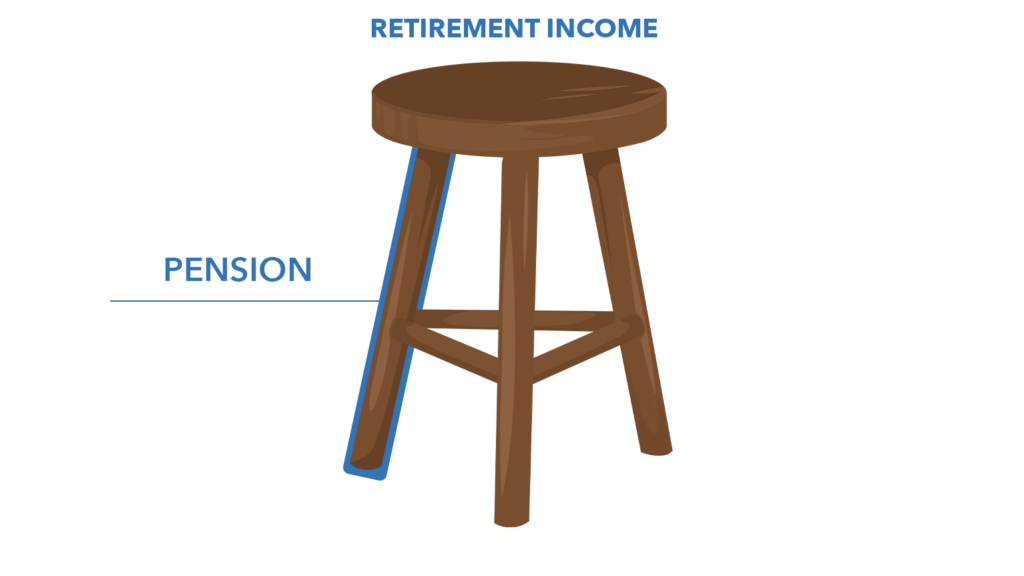
Social Security remains a foundational part of retirement for many Americans, but the pension leg of the stool has steadily weakened over time.
“Well, some of the most financially secure retirees are those with a pension,” said Retirement Planner Loren Merkle. “Because they have a pension, many of them (also) have Social Security. That feels really good. Two different guaranteed income sources for life.”
The challenge is that far fewer workers today have access to those pensions.
“Really, at this point, only about 15% of Americans have access to a corporate pension,” Loren explained.
That shift means more responsibility falls directly on the retiree.
“If part of someone’s plan has less of those guaranteed sources, then what that does is it puts more pressure on the balances that anybody accumulates during their working years,” said Retirement Planner Chawn Honkomp.
Instead of relying on guaranteed monthly income, retirees today must decide how much to save, how to invest, whether to contribute to traditional or Roth accounts, and how to generate income once they stop working.
More Decisions Than Ever Before
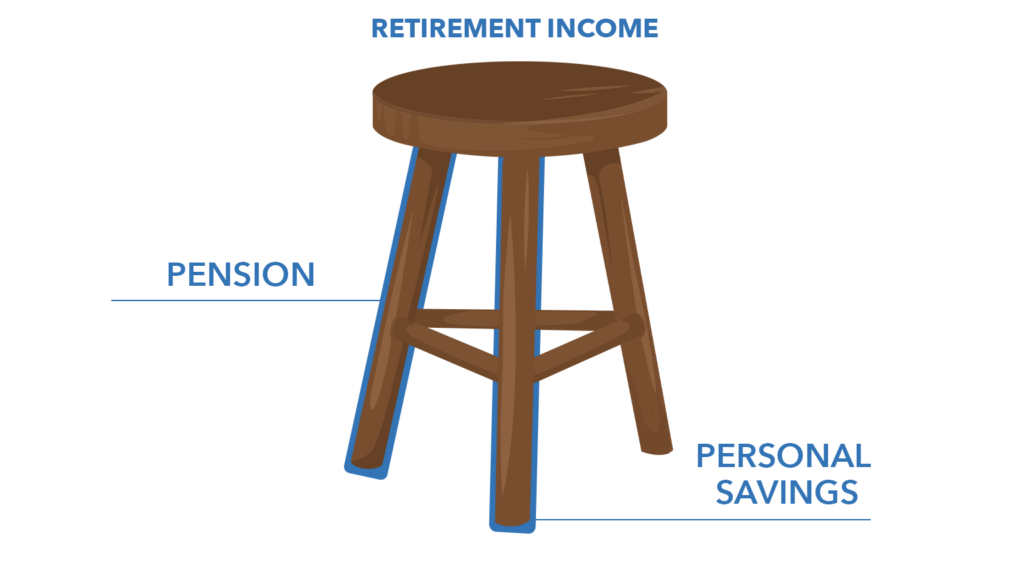
For previous generations, retirement decisions were often straightforward.
“My grandpa retired in the mid-’80s,” Loren said. “He had Social Security, he had a pension from Ford Motor Company… and just a touch of personal savings.”
Loren explained that his grandparents were able to travel the country in their motor home for decades because much of their retirement income was guaranteed.
“They didn’t have a whole lot of decisions financially that they had to make because they had that guaranteed income coming in,” he said.
Today’s retirees can face a very different reality.
Workers must decide how much to contribute to a 401(k), which investments to choose, how aggressively to invest, and eventually how to turn those savings into income.
One of the biggest transition points often comes around age 59½, when many people have the option to move money from a workplace retirement plan into an IRA.
“The 401(k)s are great,” Chawn said. “They’re the employer plans. You’re limited to certain investment options, and you can only do certain things. When you can move that money out to an IRA, and should you move that out to an IRA is one of the big questions.”
Moving the money to an IRA can create opportunities, but it can also create uncertainty.
“You’ve got the entire universe of investments,” Chawn explained. He added that those choices can be overwhelming, and that working with a retirement planner can help you align the investments with your retirement vision.
Why Income Diversification Matters
Like the feeling of bouncing on a pogo stick, retirement savings that are not diversified can leave you feeling unsteady as you head into retirement.
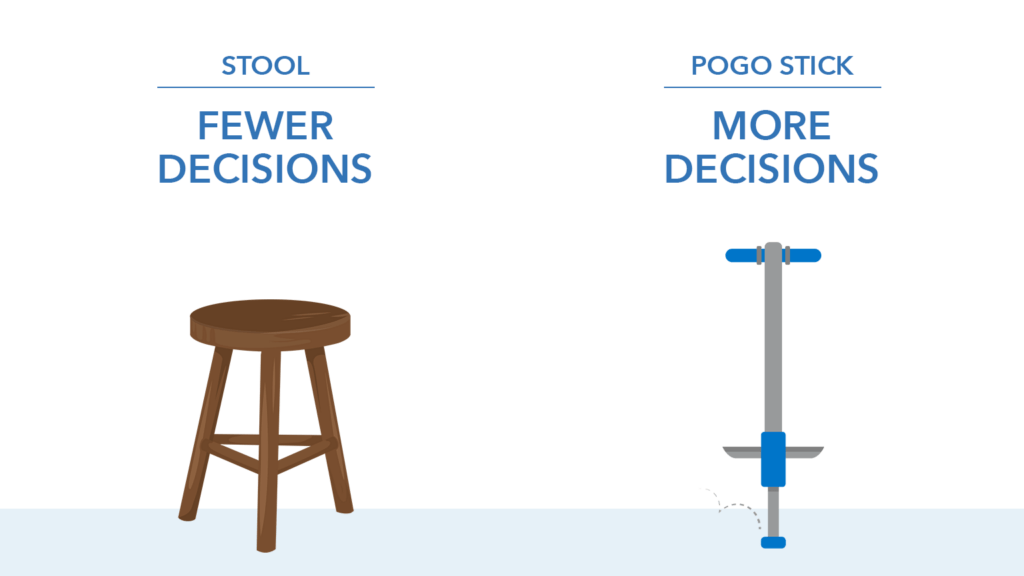
“Income diversification brings balance back to the unbalanced pogo stick type analogy,” Loren said.
Rather than relying on a single account for retirement income, Loren and Chawn say that the comprehensive plans they help individuals and families build often include different income buckets designed for different purposes.
“You can get income now from this bucket, you can get income later from this bucket, and you have your income forever from this bucket over here,” Loren explained.
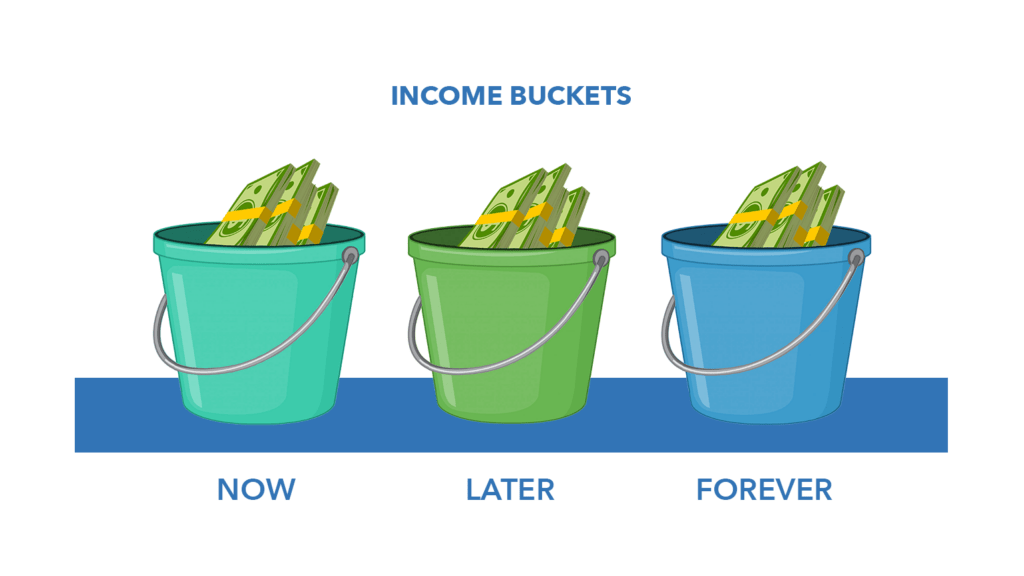
This bucket strategy can help retirees feel more confident during market volatility because not every dollar is invested the same way or intended for the same timeline.
“It takes away some of the guessing,” Loren said.
But creating those buckets starts with understanding lifestyle goals.
“Before you create these three buckets, you need to determine what’s your lifestyle going to look like,” Chawn explained. “Because what your lifestyle is going to look like in retirement is going to have a direct impact on what it’s going to cost.”
Retirement planning is not just about accumulating savings. It is about coordinating income sources, spending needs, investment risk, and long-term goals.
The Importance of Tax Diversification
Income planning is only part of the equation.
Tax diversification has become increasingly important as retirees accumulate large balances in pre-tax retirement accounts.
“Tax diversification within a comprehensive retirement plan is all about having different options,” Chawn said.
Many retirees have the majority of their savings in traditional pre-tax accounts such as 401(k)s and IRAs. Chawn and Loren advise building savings across three different tax buckets:
- Pre-tax accounts
- Roth accounts
- Taxable or non-qualified accounts
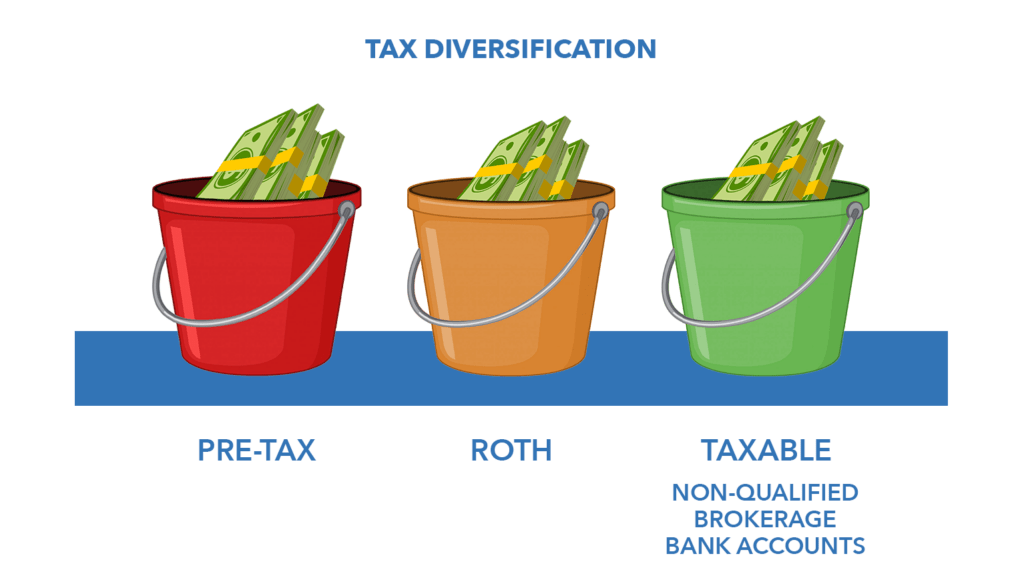
“Why we want diversification is that all three of those buckets are taxed in different ways,” Chawn explained.
Having multiple tax buckets can provide flexibility when generating retirement income.
“We can take distributions from the right types of accounts at the right time and be more intentional with what your tax bill is going to be throughout anybody’s retirement journey,” he said.
Loren added that combining an income plan with a tax plan creates opportunities many previous generations did not have.
“You can deliver the income that you need now, later, and forever, but you can decrease your overall retirement tax bill,” Loren said.
Adjustments Are Often Needed
One of the biggest changes in retirement planning today is that it can require ongoing adjustments.
Markets change. Tax laws change. Health changes. Spending needs change.
“We don’t build an income plan and then say, ‘Okay, that’s done. It’s written in stone,’” Loren said.
He pointed to recent legislative changes, including the SECURE Act and the One Big Beautiful Bill, as examples of why retirement planning must remain flexible.
Even Social Security, one of the remaining legs of the old retirement stool, comes with more complexity than many people may realize.
“It can add up to over $500,000 of lifetime income for a single individual, or over a million dollars of lifetime income if you’re a married couple,” Chawn said.
He added that there can be “up to 81 different options for married couples,” making Social Security far more strategic than simply choosing an age to file.
Creating Pension-Like Income in Retirement
With pensions disappearing, some retirees look for ways to recreate lifetime income through investment strategies.
“One option you have is that you can create this pension-like income benefit within an investment portfolio,” Chawn said.
These strategies are often designed to provide predictable lifetime income alongside Social Security.
Loren described how that combination can create confidence for retirees.
“Just imagine retiring knowing you need $6,000 a month to have the lifestyle that you want,” Loren said. “You have $3,000 a month coming from Social Security. That’s going to be there as long as you’re alive. And then you have $3,000 a month coming from this pension-like investment that you made.”
That structure can help retirees cover core expenses while allowing other parts of their portfolio to remain invested for growth, legacy ambitious and/or unexpected expenses.
Balance Requires a Comprehensive Plan
Today’s retirement landscape may feel more complicated than it did for previous generations, but planning opportunities have also expanded.
There are strategies that can help you gain more control over investments, taxes, income timing, and legacy planning than ever before. The challenge is coordinating all of those moving pieces into a plan that helps create confidence.
Loren explained that a comprehensive retirement plan should address multiple areas of retirement, including lifestyle, income, taxes, investments, health care, and legacy planning.
The retirement “pogo stick” may require more balance than the old three-legged stool, but with intentional planning, retirees can still build stability, flexibility, and confidence for the future.
Watch the full episode on YouTube and learn more about how to create retirement income without a pension.