Social Security will likely be a major part of your retirement paycheck, but the rules behind your benefit, taxes, and timing can be more complicated than they look on the surface. Retirement Planners Loren Merkle and Chawn Honkomp walk through seven key Social Security rules that can shape how much you actually receive over the course of retirement.
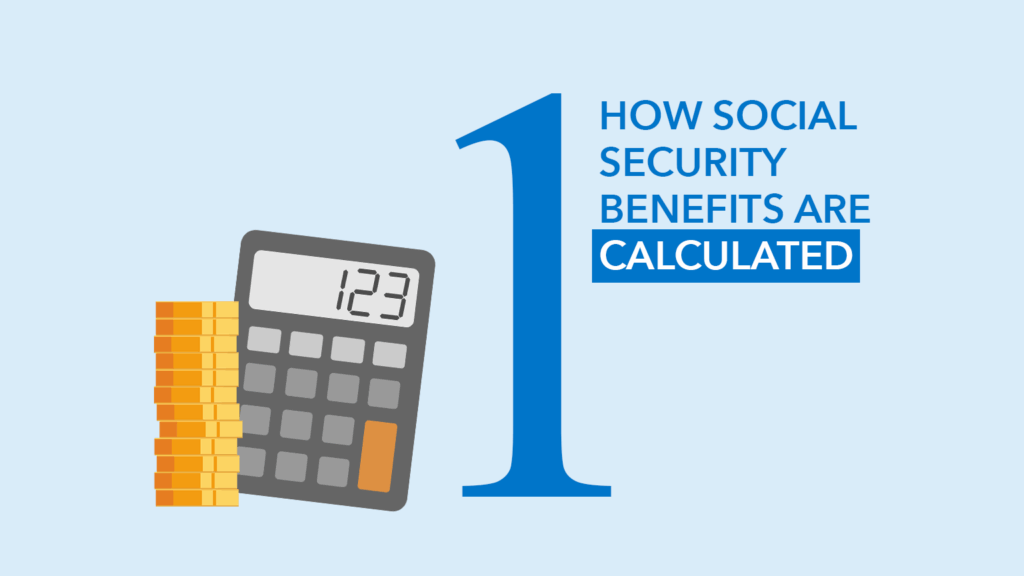
1. How Benefits Are Calculated
For many households, Social Security isn’t a side dish—it’s the main course. Chawn explains that for many people, it “can represent anywhere from 25% to 35% of their income during retirement.” That’s why, as he puts it, “It is an important decision. You want to feel really confident about it, because anytime you have guaranteed income, that’s part of your retirement plan.”
Your benefit is based on your work history. Chawn explains, “The benefit is calculated based on 35 years of working and earnings history. So the Social Security Administration is going to look at your top 35 years of your earnings history, and that shows up on your statement.” Those earnings are what drive the benefit amount you see projected.
Loren has seen what happens when those records are incorrect. He says, “We have seen, over the last number of years, a lot of mistakes on that statement. Never once have we seen a mistake that actually worked in somebody’s favor.” Instead of $50,000 of income showing up in the calculation, a zero might appear in one of those top 35 years—and that lower number may follow you into retirement.
Today, most people no longer receive paper statements in the mail, so you’ll need to create an account at SSA.gov and check your earnings history. Catching an error from a recent year is much easier than trying to verify income from the early 1980s.
And in a world where pensions are rare, Loren reminds people, “Social Security is one of the few retirement benefits most people can expect to have. It provides lifetime income and can add up to a meaningful amount for many individuals.”

2. The Earnings Test
If you claim Social Security before reaching full retirement age and keep working, the earnings test may affect how much you receive in the short term.
Chawn explains, “The Social Security Administration is going to look at your income for that time frame. They have a limit set where they don’t want you to be receiving the benefit and earning too much. Otherwise, they’re going to start reducing that benefit.”
For 2026, the annual earnings limit is expected to be $24,480 for those under full retirement age, and $65,160 for people in the year they reach full retirement age. If you earn more than those limits, Social Security will withhold $1 in benefits for every $2 over the threshold.
The key word is “withheld,” not “lost.” Loren notes, “Once you turn full retirement age, they do recalculate your benefits to account for the money that was withheld due to the earnings test.” That adjustment may help over time, but it’s still important to understand how working could reduce your benefit in the earlier years.
As Chawn puts it, “If you’re going to be on benefit prior to full retirement age, you’ve got to be aware of how much you plan to work and how much you might earn, and factor that into your decision.”
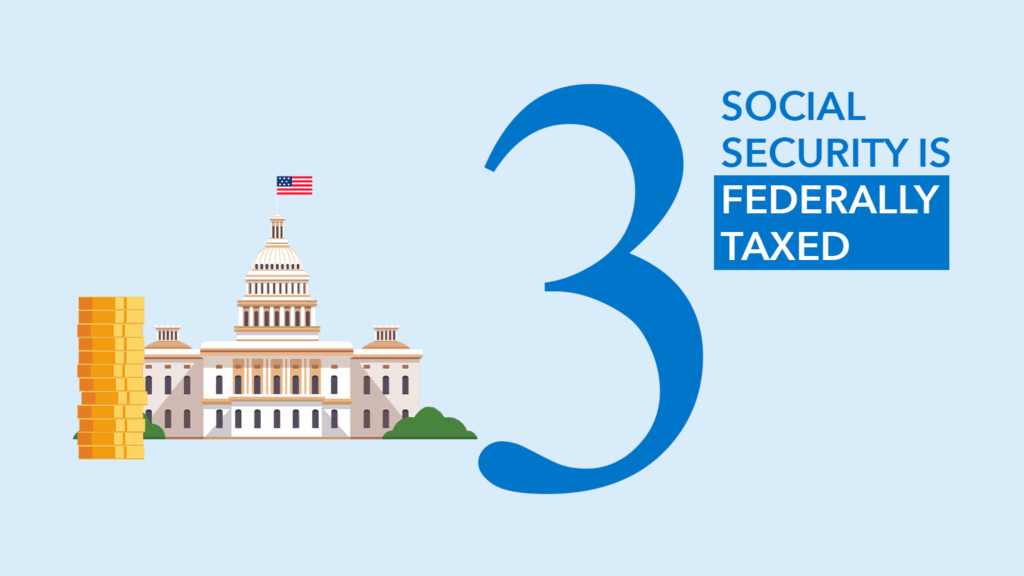
3. Social Security and Federal Taxes
Before 1984, Social Security benefits weren’t taxed at the federal level.
“We get a lot of questions around the taxation of Social Security,” Chawn says. “It’s kind of a complicated equation and situation.” He jokingly refers to the IRS’s approach as a “really super cool, fancy provisional calculation” that:
- Starts with your Social Security income
- Adds in earned income and certain other sources
- Includes only half of your Social Security in the formula
- Then applies special tax brackets for Social Security
Chawn adds, “You could have none of it taxed, 50% of it, or even 85% of your benefit subject to federal taxes.”
For married couples filing jointly, if provisional income exceeds $34,000, up to 50% of benefits may be taxable. Higher earners may see up to 85% taxed for 2026.
Loren still considers Social Security tax-favored income: “In any scenario, not 100% of your benefits are subject to tax.” With planning, he adds, “If you apply an intentional income plan, it’s possible to have 0% of your Social Security taxed.”
He explains that’s where the different “buckets” in your retirement plan—cash, Roth accounts, and pre-tax accounts—start to matter.

4. COLA: Cost-of-Living Adjustments
Cost-of-living adjustments (COLAs) are designed to help Social Security benefits keep pace with inflation, but they aren’t guaranteed increases.
Loren clarifies that COLAs are “guaranteed to be evaluated each and every year.” That doesn’t mean your check will always go up. “There have been, in fact, three times since COLA was introduced in 1975 that recipients received a 0% increase,” he says. In 2016, the increase was just 0.3%.
Even when COLAs are positive, they may not reflect retirees’ real-world expenses like housing or health care. “We can’t rely on Social Security increases to keep up with inflation,” Loren says. “We have to build inflation protection into the overall income plan in many other ways.”
For 2026, the announced COLA is 2.8%, raising the average monthly benefit from about $2,015 to $2,071.
5. Extra Benefits of Being Married
Social Security works differently for couples than for individuals. Being married opens the door to spousal and survivor benefits—and adds complexity.
“There is a benefit of being married,” Chawn says. “Now you’ve got two people with earnings histories. You’ve got two benefits being calculated.” Often, one spouse has a larger benefit, while the other may qualify for spousal or survivor benefits.
When one spouse passes away, “that larger benefit is going to remain. The lower benefit goes away,” Chawn adds. “Someone who didn’t earn much during their career might still receive a meaningful benefit through the survivor benefit.”
He emphasizes that couples have more moving parts to consider, including start dates for each benefit, survivorship planning, and coordinating decisions. “Being part of a couple brings benefits, but also complexities,” Chawn says. “It’s about analyzing all the options and feeling good about that decision.”
6. Income for Survivors
If your spouse has passed away, you may be eligible for survivor benefits—which work differently than standard retirement benefits.
While people often focus on benefits starting at age 62 or delaying to 70, Loren notes, “If your spouse has passed away and you’re eligible for the survivor benefit, you can take that as early as age 60.” However, taking it early means receiving a reduced amount.
Survivors often have more than one option. “You can take the survivor benefit and let your own benefit grow until age 70,” Loren explains. “Or you can take your own benefit early and delay the survivor benefit until full retirement age.”
He adds that coordinating those decisions can help “maximize income over the next ten to fifteen years.”
Timing matters—especially around remarriage. “Recently we had a couple who got married at 59 years and 11 months,” Loren shares. “She would have been eligible for an extra $1,500 a month from her late spouse. But because she remarried before 60, she lost access to that benefit.”
“There are a lot of factors to consider,” he says. “Don’t be afraid of the complexity—it can work to your benefit.”
7. Divorce Rules
Divorce adds another layer of Social Security rules.
“You can be eligible to file and receive a benefit based on your ex-spouse’s record,” Chawn explains. This can be especially helpful if the ex-spouse had a higher earnings history.
Loren outlines the rules: “You must have been married at least ten years, be divorced, and be eligible for Social Security. You could qualify for a spousal or survivor benefit, even if your ex-spouse hasn’t filed yet—as long as they’re eligible.”
Privacy is another concern. Chawn reassures people, “Your ex-spouse will not be notified. You claim on their record, and it does not affect their benefit.”
For divorced retirees, it’s worth comparing your own benefit to what you may receive through a former spouse—and how that may change if they pass away.
Conclusion: Planning Around Social Security
Social Security may begin with a simple question—“When should I take it?”—but Loren and Chawn’s insights show that question touches nearly every part of your retirement plan: how benefits are calculated, how work affects payments, how taxes apply, how COLAs work, and how marital status shapes your options.
Many of these choices are difficult to change once made. As Loren says, “Most of the decisions you’re going to make around Social Security are permanent after twelve months,” and “you get one chance to get this right.”
Understanding the rules ahead of time can help you make informed decisions and use Social Security as a potential foundation within your retirement plan.
Source: SSA.gov
Watch the full episode on YouTube and learn more about social security rules in retirement.