Year-End Tax Planning | 5 Strategies to Boost Your Retirement Income

As retirement approaches, it’s essential to rethink your strategy for handling your Individual Retirement Account (IRA). With a focus on maximizing benefits and minimizing taxes, this blog will help you navigate the complexities of IRAs, understand their evolution, and leverage effective strategies like Roth conversions and Qualified Charitable Distributions (QCDs). We discuss important IRA rules and strategies that could help you make the most of your IRA as you near retirement.

–––––––––––––––––––––––––––––––––––––––––––––––––––––––––––––––––––––––––––––––––––––––––––––

Rethinking Your IRA

The Evolution of IRAs

IRAs have been a staple of retirement planning since their introduction in 1974. At first, they were only available at banks, and only workers without access to a pension could contribute.  

In 1974, the contribution limit per year was $1,500. From 1982 through 2001, that amount remained unchanged. Legislation passed in 2001 that indexed the contribution limit for inflation, starting the following year. The contribution limit has climbed to $7,000 for those under age 50 for 2025 and $8,000 for those age 50 or older.

Understanding IRA Taxes

One often overlooked aspect of a pre-tax or traditional IRA is that they include a future tax liability. Think of it as a deal you made with the IRS: you were able to deduct the contributions from taxable income in the year they were made, but when you start taking distributions from the account, you must pay that tax bill – on both the contributions and the growth.

Roth Conversions: A Tax-Efficient Strategy

A Roth conversion involves transferring pre-tax IRA funds into a Roth IRA. Although you pay taxes on the converted amount in the year of the conversion, the funds then grow tax-free and qualified distributions can be taken tax-free in retirement. 

For some, a long-term tax strategy, such as converting to a Roth IRA, can drastically reduce your retirement tax bill.

Qualified Charitable Distributions (QCDs)

For those aged 70½ or older, Qualified Charitable Distributions (QCDs) can be used to reduce taxable income while supporting charitable causes. Essentially, a QCD allows you to transfer funds directly from your IRA to a qualified charity without paying taxes on the distributed amount. 

This can also fulfill all or part of your Required Minimum Distribution (RMD). By integrating QCDs into your strategy, you can reduce your taxable income and meet charitable goals simultaneously. 

The annual QCD limit is $108,000 in 2025.

Building a Recession-Resistant Portfolio

Sequence of returns risk is a significant concern for pre-retirees who will soon depend on their retirement savings for income. 

Market downturns early in retirement can negatively impact your portfolio. In this episode, Loren discusses the importance of building a recession-resistant portfolio to protect your retirement savings from market swings.

The Comprehensive Retirement Plan

Retirement isn’t just about managing IRAs and minimizing taxes. A comprehensive plan should include six essential pillars of retirement: lifestyle, income, taxes, investments, health care, and legacy. Your journey to retirement should include a well-rounded approach.

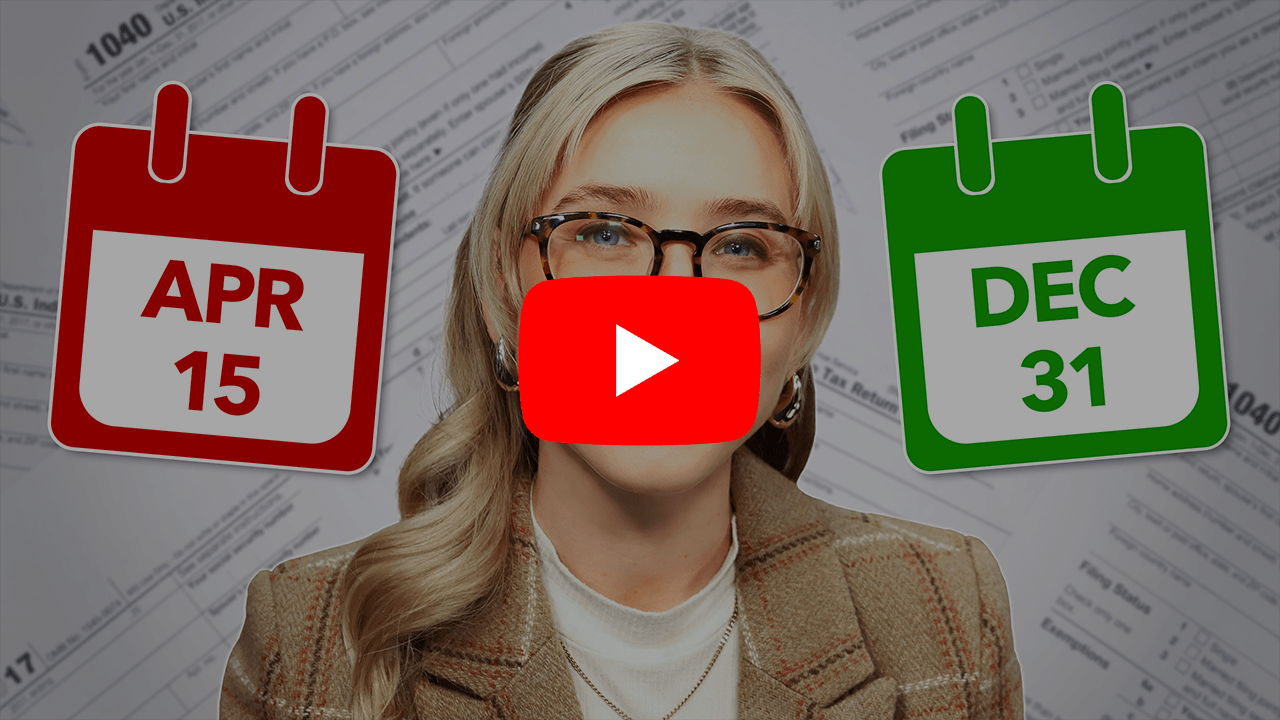
Click here to watch the full episode “5 Strategies for Year-End Tax Planning” on YouTube!

Source: Investopedia.com
FOLLOW US ON SOCIAL

Visual-Insights-Newsletter-Ad_v2

Sign-up for our Visual Insights Newsletter for the latest retirement information and strategies – straight to your inbox.

  • This field is for validation purposes and should be left unchanged.

Discover more strategies you could be missing out on
Man smiling next to an image that says "Top 10 Retirement Wake-Up Calls".

The Top 10 Retirement Wake-Up Calls 

Retirement may bring dreams of sandy beaches, golf outings, and more time with family—but it also comes with surprises that can catch many off guard. In a recent episode of Retiring Today, Loren Merkle and Chawn Honkomp counted down the top 10 retirement wake-up calls. These “uh-oh moments” highlight the realities retirees face and the…

Read More...
Man smiling next to the four types of investors.

Are You Making These Investor Mistakes? 

Market volatility is unsettling, and it’s easy to make mistakes when emotions take over. Retirement Planners Chawn Honkomp and Loren Merkle tackle the most common investor missteps—and how to avoid them. From panic selling during downturns to sitting on the sidelines waiting for the “perfect time,” and even holding on to investments too long, they…

Read More...
Woman holding two cards that say "Fact" and "Fiction respectively. A headline stating "The market is too risky?" sits above her head.

Retirement Fact or Fiction: Investments 

When it comes to retirement, some of the most common beliefs about investing sound true—but in reality, they can lead you down the wrong path. Misconceptions about the stock market, savings accounts, bonds, or even the 4% rule can cause retirees to make costly mistakes.  To help separate truth from fiction, Retirement Planners Loren Merkle…

Read More...
Man mid-sentence standing next to a visual example with the words "Same Couple 200K Difference" above it.

7 Essential Questions Your Financial Advisor Should Be Asking

Retirement planning isn’t just about saving money. It’s about making sure your plan supports the life you want to live once you stop working. Asking the right questions can uncover your goals, anticipate challenges, and create a plan that gives you and your loved ones peace of mind. Retirement Planners Loren Merkle and Clint Huntrods…

Read More...
Man smiling with townhomes in the background.

How Do I Stack Up? Understanding Where You Stand with Your Retirement Savings 

That comparison—how you “measure up” to your peers, your neighbors, or even a number you once read in an article—is normal. But it’s not always helpful without context. Retirement Planners Loren Merkle and Chawn Honkomp discussed what those averages really mean and, more importantly, how to start focusing on what matters: your own retirement goals…

Read More...
Man smiling standing next to a chart that says 'Stay Invested".

Market Volatility: Why Staying Invested Matters 

Market volatility. The phrase alone is enough to make some people uneasy — especially those approaching retirement. After all, when headlines scream about the “biggest drop in decades,” the instinct to hit the brakes is strong. But is that the right move?  In this blog, we’ll explore how volatility works, why emotional reactions can quietly…

Read More...

Ready to take your retirement to the next level?

Let's chat! Schedule a RetireReady Call to talk with a retirement planner about your retirement vision.

Ready to take your retirement to the next level?

Let's chat! Schedule a RetireReady Call to talk with a retirement planner about your retirement vision.

Call Now Button