Many retirees are surprised to learn that a large IRA balance can create a significant tax bill later in retirement. This blog explores how Roth conversions work, why taxes may become one of your biggest retirement expenses, and how a proactive tax strategy could help reduce the lifetime taxes you pay while creating more flexibility for your retirement income plan.
If you’re in your early 60s and have accumulated a million dollars or more in an IRA, you may feel like you’ve reached an important retirement milestone. After decades of diligent saving, seeing that seven-figure balance can provide a sense of confidence about the future.
But there is one important detail many retirees overlook: not all of that money belongs to you.
Much of the money in traditional IRAs and pre-tax 401(k) accounts has never been taxed. That means every dollar withdrawn in retirement may be subject to ordinary income taxes.
As Chawn Honkomp, CFP®, RICP®, CPA, Certified Financial Fiduciary®, explained, “When those distributions are taken in retirement, all of those dollars are subject to income tax.”
For many retirees, taxes can become one of the largest expenses they face in retirement.
The Myth of the Lower Tax Bracket
One of the most common assumptions people make is that they’ll automatically be in a lower tax bracket after they stop working.
That assumption is not always correct.
According to Chawn, “Just because you have a lower taxable income, that does not equal and does not mean that any one household is at a lower marginal tax rate.”
Retirees often have multiple sources of income, including Social Security benefits, pension income, Required Minimum Distributions (RMDs), and withdrawals from investment accounts. When all of these income streams are combined, the resulting tax bill may be larger than expected.
Why Required Minimum Distributions Matter
For many retirees, the tax challenge can grow over time.
Under current rules, most retirees must begin taking Required Minimum Distributions from traditional retirement accounts at age 73 or 75, depending on their birth year. These withdrawals are mandatory whether the money is needed or not.
As Chawn explained, “The government is going to require you to take a certain amount of those pre-tax savings out, whether you need them or not.”
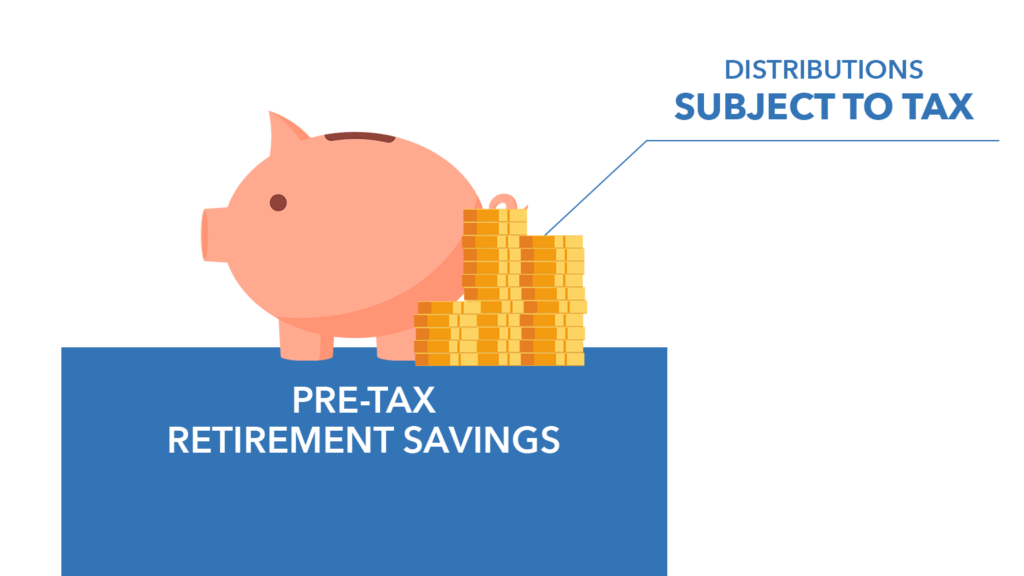
The challenge is that if a retiree allows a large IRA to continue growing for years without taking meaningful distributions, the account balance may be substantially larger by the time RMDs begin. Larger balances often mean larger distributions and potentially larger tax bills.
Why Many Retirement Planners View Today’s Tax Environment Favorably
Tax planning becomes even more important when considering today’s tax environment.
Loren Merkle, CFP®, RICP®, Certified Financial Fiduciary®, noted that current tax rates are historically favorable.
“We often describe today’s tax environment as favorable because current tax brackets are lower than many historical periods,” Loren said.
Today’s tax brackets may create an opportunity for some retirees to voluntarily recognize income now through Roth conversions rather than potentially facing higher tax rates later.
Of course, nobody knows exactly what future tax legislation will look like. However, retirement planners often encourage retirees to evaluate whether paying some taxes today could potentially reduce their overall lifetime tax burden.
What Is a Roth Conversion?
A Roth conversion allows money to move from a traditional IRA into a Roth IRA.
The tradeoff is straightforward:
- The amount converted becomes taxable income in the year of the conversion.
- Future qualified withdrawals from the Roth IRA may be received free from federal income taxes under current tax law.
- Growth inside the Roth IRA may accumulate free from federal income taxes under current tax law.
Roth IRAs are not subject to lifetime RMDs for the original owner under current rules.
Jill’s Million-Dollar IRA Example
Jill’s Million-Dollar IRA Example
To illustrate the potential impact of Roth conversions, Loren walked through a hypothetical example.
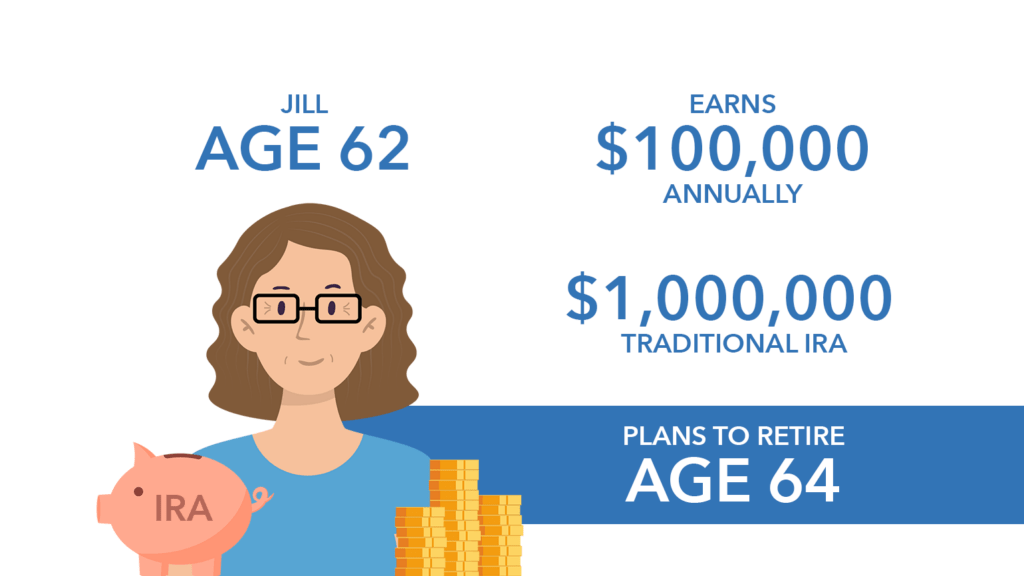
Jill is 62 years old, earns $100,000 annually, and has accumulated $1 million in a traditional IRA. She plans to retire at age 64.
Working through a 20-year retirement projection, two scenarios were evaluated.
Scenario One: No Roth Conversions
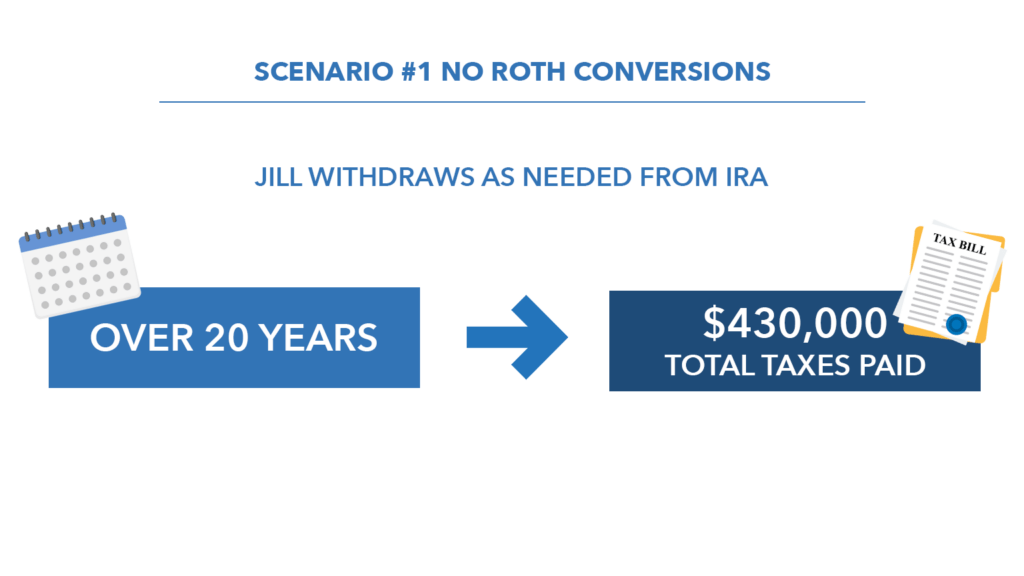
In the first scenario, Jill simply withdraws money from her IRA as needed throughout retirement.
Over a 20-year period, the projected total taxes paid add up to approximately $430,000.
Loren noted, “If your pre-tax retirement accounts are seven figures, it is not uncommon for that 20-year retirement tax bill to add up to be $400,000, $500,000, or even $600,000.”
Scenario Two: A Strategic Roth Conversion Plan
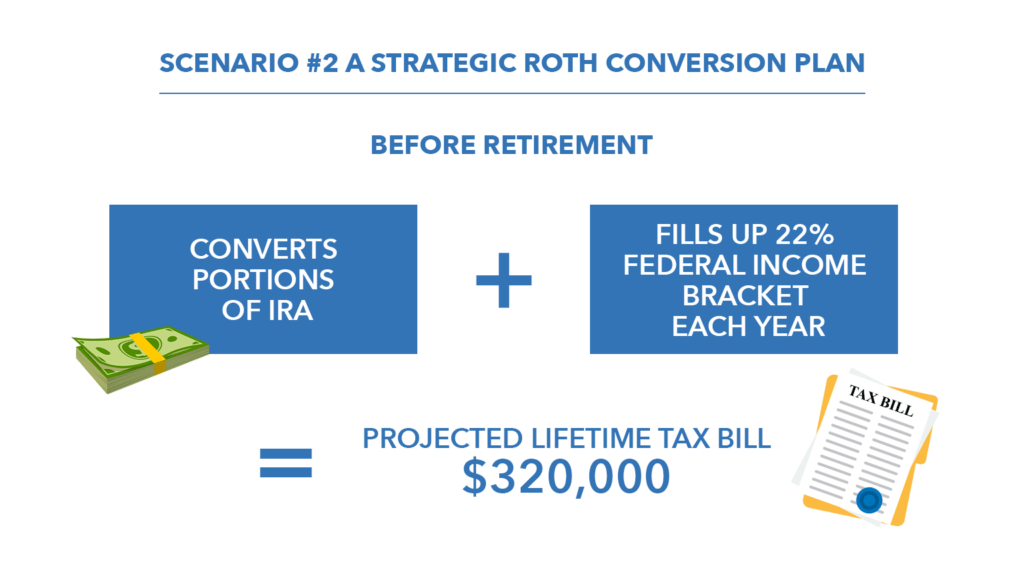
In the second scenario, Jill implements a seven-year Roth conversion strategy.
Instead of waiting until retirement is fully underway, she begins converting portions of her IRA while intentionally filling up her 22% federal tax bracket each year.
Because she retires after two years, she has additional room in lower tax brackets once her earned income stops, allowing larger conversions during those years.
The result?
Her projected lifetime tax bill declines from approximately $430,000 to $320,000.
That’s a difference of roughly $110,000.
As Loren pointed out, “Paying $110,000 less over the course of Jill’s lifetime in retirement, that is significant.”
Why Timing Matters
One of the most important lessons from Jill’s example is that Roth conversions are often most effective during specific planning windows.
Many retirees have a period between retirement and the start of Social Security benefits or RMDs when taxable income may temporarily be lower.
Those years can provide opportunities to complete conversions at favorable tax rates.
Loren emphasized the importance of starting early, explaining that “people realize how they can really improve their retirement picture by planning as early as possible.”
Waiting too long may reduce the flexibility available to implement an effective strategy.
Roth Conversions Are Not One-Size-Fits-All
A Roth conversion can be powerful, but it is not automatically the right choice for everyone.
Factors that should be considered include:
- Current tax bracket
- Expected future tax bracket
- Retirement income needs
- Social Security timing
- Pension income
- Estate and legacy goals
- Available cash to pay conversion taxes
- Expected investment growth
The goal is not simply to convert money because Roth accounts sound attractive. The goal is to determine whether paying taxes now could potentially help reduce taxes later and create greater tax flexibility over time.
As Loren explained, “The important thing is that you do the analysis.”
Six Retirement Planning Steps to Consider
The discussion highlighted six areas retirees should review as they approach retirement:

Tax planning should look decades into the future rather than focusing only on the current year.
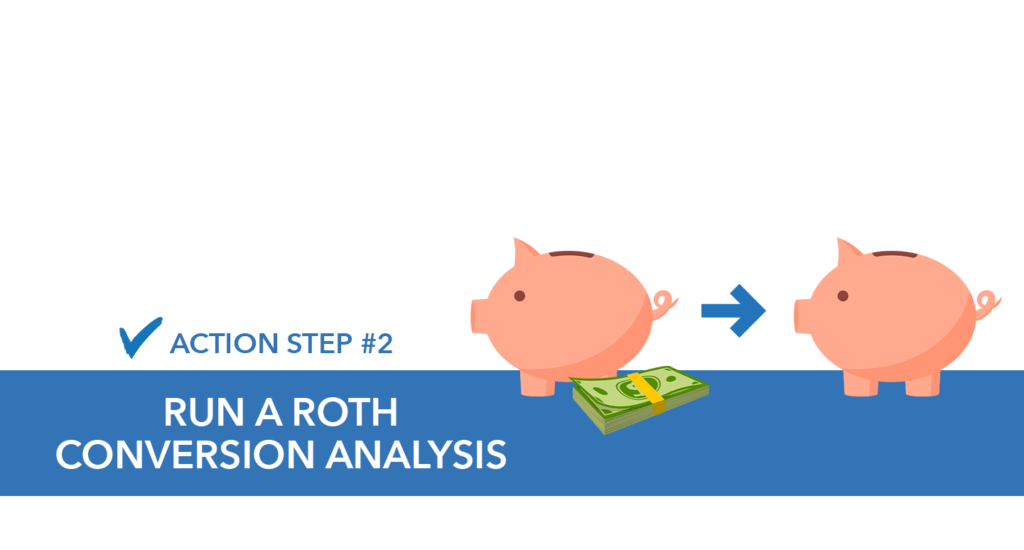
Evaluate how different conversion amounts could affect lifetime taxes.
Claiming strategies can affect both income and taxes throughout retirement.
Retirement portfolios often require a different approach than accumulation-stage portfolios.

Health care expenses and Medicare decisions can significantly affect retirement spending.
Taxes can impact not only your retirement but also what beneficiaries ultimately inherit.
The Bottom Line
A million-dollar IRA is an impressive accomplishment, but it can also create future tax challenges if left unmanaged.
For some retirees, Roth conversions may provide an opportunity to reduce lifetime taxes, create more tax flexibility, and leave more money available for retirement spending or future generations.
The key is understanding the tradeoffs, evaluating the numbers, and building a strategy that aligns with your retirement vision and long-term objectives.
Before making any decisions, it can be helpful to evaluate how different tax strategies may affect your unique situation and long-term retirement plans.
Watch the full episode on YouTube and learn more about how Roth conversions work, and why taxes may become one of your biggest retirement expenses.