As retirement approaches, uncertainty around recessions, market volatility, and risk often grows. Retirement planners Loren Merkle and Clint Huntrods offer practical guidance for turning market volatility from a source of anxiety into an opportunity for long-term financial growth. This blog post explores their actionable strategies—dollar-cost averaging, Roth conversions, and building a recession-resistant portfolio—designed to help pre-retirees find confidence and direction, regardless of what the markets are doing.
–––––––––––––––––––––––––––––––––––––––––––––––––––––––––––––––––––––––––––––––––––––––––––––
Understanding Market Volatility and Recessions
A key takeaway from Loren and Clint is that volatility isn’t unusual—it’s an inherent part of investing. Since World War II, the U.S. has seen an average of one recession every 6.5 years, typically lasting around ten months.

Anyone looking at a 25 to 30-year retirement should fully expect to experience several recessions along the way.
What often triggers the most anxiety is seeing account values fluctuate dramatically, especially in the years immediately before or after retirement. It’s common to wonder if you’ve saved enough or if you’re taking on more risk than you can handle. The natural impulse when faced with market declines, as both Loren and Clint observe, is to want to do something—usually to pull out of investments and into cash. However, this kind of emotional, reactive decision-making can mean locking in losses and missing out on eventual rebounds.
Why Going to Cash Rarely Works Out
Loren underscores the double challenge of “going to cash”: you have to decide not only when to exit the market, but also when to get back in—and the latter is significantly harder. Following major downturns, markets often turn positive before headlines or economic markers signal that a recovery is underway. For instance, while the 2008-2009 financial crisis was headline news for years, markets had already begun a historic rebound in 2009, even as the mood remained pessimistic.
Missing out on those crucial recovery periods can dramatically diminish long-term returns. That’s why Loren and Clint encourage investors to focus instead on strategies that don’t require crystal ball predictions or perfectly timed moves.
Dollar-Cost Averaging: Investing Without the Guesswork
Dollar-cost averaging is one such strategy. Clint explains this as a systematic approach—investing a fixed amount on a regular schedule regardless of market performance. This method allows investors to buy more shares when prices are low and fewer when prices are high, resulting in a lower average cost per share over time.
This hypothetical example will show you how dollar-cost averaging works.
Let’s say an investor decides to invest $1,000 each month into a single company’s stock for five months. The share price of that company fluctuates each month, ranging from $50 a share in January to $25 a share in March.
Month-by-Month Breakdown:
January: Share price = $50
$1,000 / $50 = 20 shares purchased
February: Share price = $40
$1,000 / $40 = 25 shares purchased
March: Share price = $25
$1,000 / $25 = 40 shares purchased
April: Share price = $35
$1,000 / $35 ≈ 28.57 shares purchased
May: Share price = $50
$1,000 / $50 = 20 shares purchased
Total Amount Invested:
$1,000 x 5 months = $5,000
Total Shares Purchased:
20 (Jan) + 25 (Feb) + 40 (Mar) + 28.57 (Apr) + 20 (May) = 133.5 shares

Average Cost Per Share:
$5,000 invested / 133.5 shares ≈ $37.45 per share

How Does This Compare to Investing All at Once?
If instead, the investor put all $5,000 in at once when the share price was $50 (like in January or May), they would have purchased:
$5,000 / $50 = 100 shares at $50 a share

With dollar-cost averaging, by investing consistently each month—even when the market is down—the investor ends up buying more shares at lower prices. This resulted in 133.5 shares bought at an average cost of $37.45 per share, compared to just 100 shares if all the funds were invested at once at $50 per share.

It’s a great illustration of how dollar-cost averaging lets you “buy more when prices are low” and smooths out the purchase price over time, especially during periods of market volatility!
Even retirees who aren’t actively contributing new money can take advantage of this principle by strategically rebalancing or reallocating certain assets when markets are down, turning paper losses into real opportunities for future gains.
Roth Conversions: Making Volatility Work in Your Favor
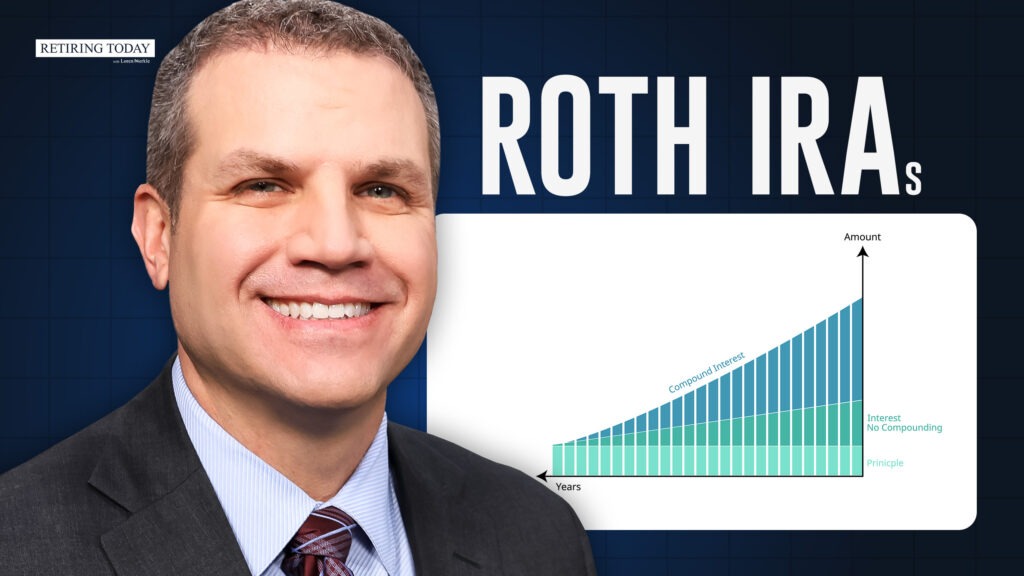
Another powerful tactic is the Roth conversion. This involves shifting money from a pre-tax IRA to a Roth IRA, paying tax on the converted amount in the current year, but allowing for tax-free growth and withdrawals going forward.
The optimal moment to do a Roth conversion is often during periods of market decline. By converting investments when prices are low, investors can move more shares for the same dollar amount. When the market rebounds, that growth happens in the Roth account, shielding it from future taxes. This not only helps reduce your overall tax burden in retirement but can also boost the amount of wealth growing tax-free.
Loren emphasizes that this move requires planning—considering both current tax impacts and your long-term retirement outlook—to ensure each conversion is as efficient as possible.
Building a Recession-Resistant Portfolio
Retirement isn’t just about investments; it’s about making sure all parts of your financial life work together. Loren and Clint stress the need for a comprehensive plan that coordinates income needs, tax strategies, health care considerations, and estate wishes.
A recession-resistant portfolio is not simply a set-and-forget mix of stocks and bonds. It’s a series of strategies and allocations designed to provide reliable income, minimize the impact of market downturns, and make the most of opportunities as they arise. This includes proactive steps like dollar-cost averaging, timely Roth conversions, and portfolio adjustments that fit your unique lifestyle and goals.
Conclusion
Market volatility is inevitable, but anxiety and fear don’t have to be. With careful planning, informed strategies, and a long-term perspective, pre-retirees can turn turbulent markets into opportunities to maximize their retirement savings.
Click here to watch the full episode “Understanding Market Volatility and Recessions ” on YouTube!
Source: History.com