Navigating Your Retirement Tax Strategy: Sherri’s Journey to Tax Diversification

When planning for retirement, there’s often a lot of focus on growing your nest egg through diversified investments, but what about diversifying your taxes? This is about strategic and long-term tax planning that could lower your tax bill and maximize your retirement income.  

–––––––––––––––––––––––––––––––––––––––––––––––––––––––––––––––––––––––––––––––––––––––––––––

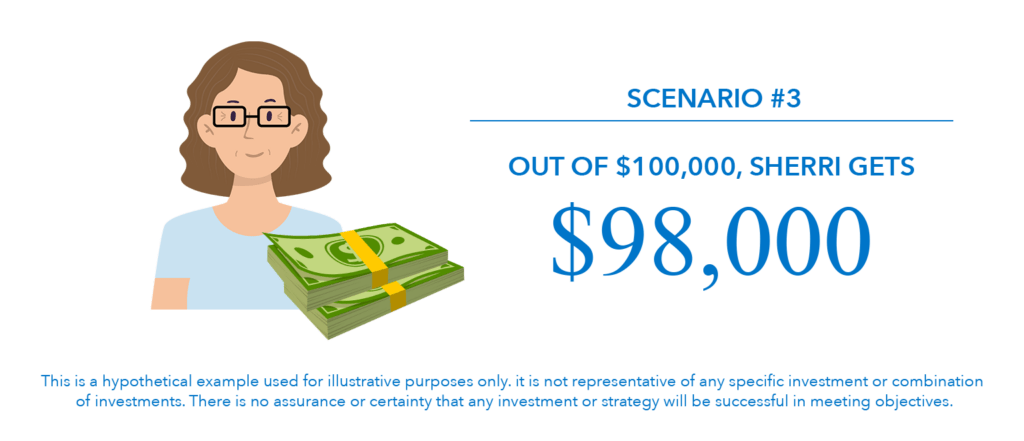
We explore the concept of tax diversification, illustrated by the hypothetical scenario of a woman named Sherri who has planned for retirement income and identified that she needs to take $100,000 from her retirement investments to fund her desired lifestyle for one year. Through three scenarios, we see how different distributions from various tax buckets can significantly impact her net spending power. 

Scenario One: Traditional IRA

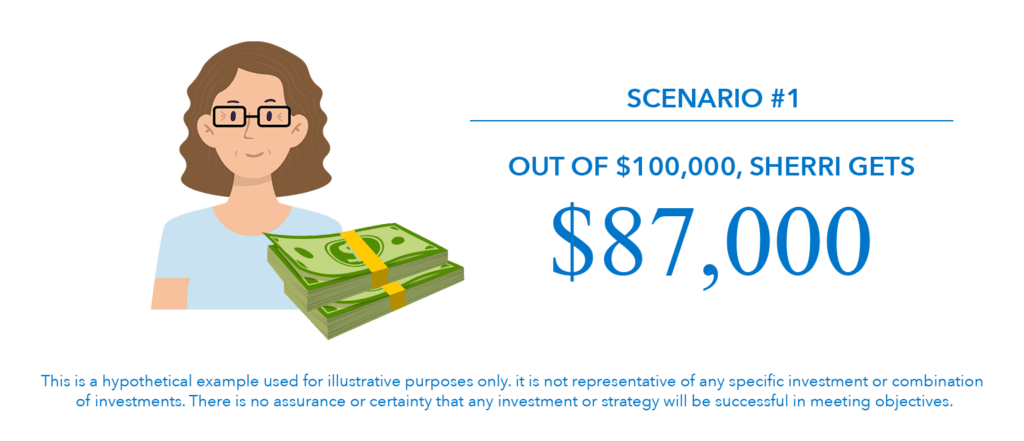
In this scenario, Sherri draws her entire $100,000 retirement income from a traditional IRA. Since all withdrawals from this account are subject to ordinary income tax, Sherri’s spendable income is reduced to $87,000 after taxes. This method is common due to familiarity with traditional IRAs and 401(k) plans, but as the planners explain, it’s not the most efficient strategy. 
Scenario Two: Introducing Roth Conversions

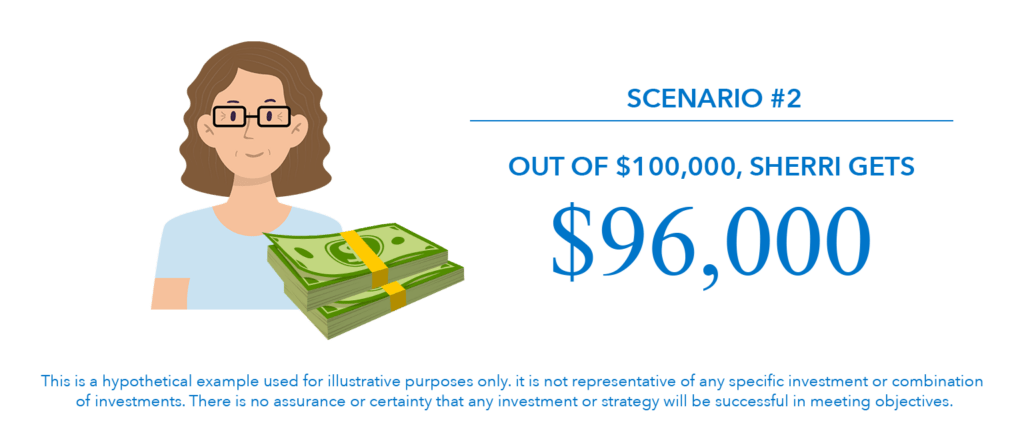
Here’s where Sherri starts getting creative. Now, she distributes her income between a pre-tax IRA and a Roth IRA – a move made possible by prior Roth conversions. By taking $50,000 from her pre-tax IRA and another $50,000 tax-free from her Roth IRA, Sherri increases her net income to $96,000. This scenario showcases how Roth IRAs can enhance retirement income through tax-free qualified distributions. 
Scenario Three: Tax Diversification

In the third scenario, Sherri maximizes her tax diversification by incorporating a third bucket: non-qualified accounts, which might include brokerage accounts or bank savings. 
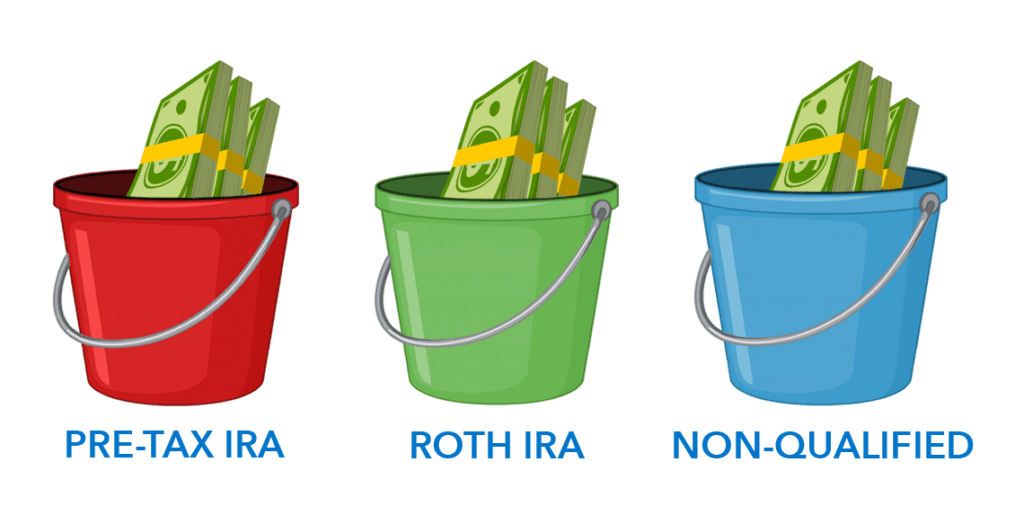
She strategically withdraws $30,000 from her pre-tax IRA, $40,000 from her Roth IRA, and $30,000 from her non-qualified accounts. 

This approach leaves her with $98,000 of net spendable income, underscoring the power of strategic planning. 
Each scenario underscores the critical role of planning ahead for tax efficiency. Roth conversions, which allow for transferring funds from a traditional IRA to a Roth IRA while paying taxes in the year you do the conversion, can be a game-changer. This strategy allows for tax-free growth and qualified distributions later, making it particularly attractive for those aiming for financial flexibility in retirement. 

Retirement Planners Loren Merkle and Chawn Honkomp also stress the importance of a long-term tax strategy, distinct from annual tax filings. Instead of focusing solely on minimizing taxes each year, they advise considering how to minimize taxes over the course of your entire retirement. This involves projecting future tax scenarios and potential changes to tax laws that might affect retirement funds. 

Click here to watch the full episode “Three Ways to Lower Taxes in Retirement” on YouTube!

FOLLOW US ON SOCIAL

Visual-Insights-Newsletter-Ad_v2

Sign-up for our Visual Insights Newsletter for the latest retirement information and strategies – straight to your inbox.

  • This field is for validation purposes and should be left unchanged.

Discover more strategies you could be missing out on
man standing next to a few words of text and retirement related iconography.

5 Reasons People Put Off Retirement Planning and What the Delay Could Cost

Retirement planning is easy to push down the to-do list, especially when retirement still feels years away. But waiting can mean missed opportunities involving taxes, investments, health care, and retirement income. Here are five common reasons people put off creating a written retirement plan and why starting earlier can make a difference.  1. Conflicting Priorities Make Planning…

Read More...
woman looking neutral next to a heading of text and a cartoon visual representing long-term care.

A New Way to Think About Paying for Long-Term Care 

Long-term care can become one of the largest expenses in retirement. Understanding what qualifies as long-term care, what care can cost, the limitations of traditional long-term care insurance, and newer approaches to preparing for the expense can help you build it into your overall retirement plan. What Does Long-Term Care Really Mean?  Long-term care can be difficult…

Read More...
Man looking unsure next to a few lines of text. A couple talking at a table is faded into the background.

The 5 Retirement Conversations Every Couple Should Have 

Retirement brings decisions that affect both spouses, from how you want to spend your time to what happens to income when one spouse dies. These five conversations can help couples identify differences, understand potential financial consequences, and build a retirement plan around the life they want to share. — Retirement planning involves plenty of numbers, but some of the most important…

Read More...
man and woman pointing up at a headline with YouTube button overlaid.

Retirement Planner vs. Financial Advisor: What’s the Difference?

As retirement gets closer, the financial guidance you need may change. Understanding the difference between investment-focused advice and comprehensive retirement planning can help you identify whether your current approach addresses income, taxes, Social Security, health care, investments, lifestyle, and legacy. — For decades, much of your financial life may have centered on one goal: saving and investing for the…

Read More...
man standing next to buckets with a puzzled look on his face.

Will Your Money Last as Long as You Do?

Saving enough for retirement is only part of the equation. Learn how identifying your income gap, planning for inflation and taxes, and dividing savings into now, later, and forever buckets can help turn a retirement nest egg into an income strategy designed to last.  Saving $1 Million Is Different From Having a Plan Reaching a retirement savings goal can feel like…

Read More...
man standing in front of two market charts looking serious.

6 Money Moves for Market Swings

Market volatility is inevitable, but it does not have to derail your retirement plans. These six retirement planning moves can help you prepare for market swings, protect your retirement income, manage investment risk, uncover potential tax opportunities, and take advantage of market downturns.  — Market swings can feel very different when retirement is getting closer.  While you are working…

Read More...

Ready to take your retirement to the next level?

Let's chat! Schedule a RetireReady Call to talk with a retirement planner about your retirement vision.

Ready to take your retirement to the next level?

Let's chat! Schedule a RetireReady Call to talk with a retirement planner about your retirement vision.

Call Now Button