Saving enough for retirement is only part of the equation. Learn how identifying your income gap, planning for inflation and taxes, and dividing savings into now, later, and forever buckets can help turn a retirement nest egg into an income strategy designed to last.
Saving $1 Million Is Different From Having a Plan
Reaching a retirement savings goal can feel like crossing the finish line. If you have accumulated $1 million, or whatever number you set for yourself years ago, you may feel like you have accomplished the hard part.
But retirement creates an entirely new challenge: turning those savings into a paycheck.
For decades, money has generally flowed in one direction. You received a paycheck, covered your expenses, and added money to your 401(k), IRA, or other savings. In retirement, that process changes. Your portfolio may now need to help fund your lifestyle month after month.
As Loren Merkle, CFP®, RICP®, Certified Financial Fiduciary®, explains, “You’ve saved a million dollars for retirement. That’s a lot of money, but you’re right; then you start to realize savings is different than a plan.”
That transition can be both financial and emotional. Clint Huntrods, PhD, Certified Financial Fiduciary®, says, “You’ve been adding to your portfolio over time, and now in retirement, you need to start to take some money out of that to deliver some of your lifestyle needs.”
The question is no longer simply how much you have saved. It is how those savings may help support your retirement vision over time.
Start With Your Retirement Lifestyle Number
Before deciding where retirement income should come from, it helps to know how much income you actually need.
That begins with your lifestyle.
Some people expect to spend more during retirement because they want to travel, pursue hobbies, or spend more time with family. Others anticipate spending less. For some, the goal is simply to maintain roughly the same lifestyle they enjoyed while working.
Once you have an estimated monthly number, you can begin comparing it with the income you already know will be coming in.
Consider this hypothetical example: suppose you determine that you need $7,000 per month to support your retirement lifestyle. If Social Security provides $3,200 per month, you have a $3,800 monthly income gap.
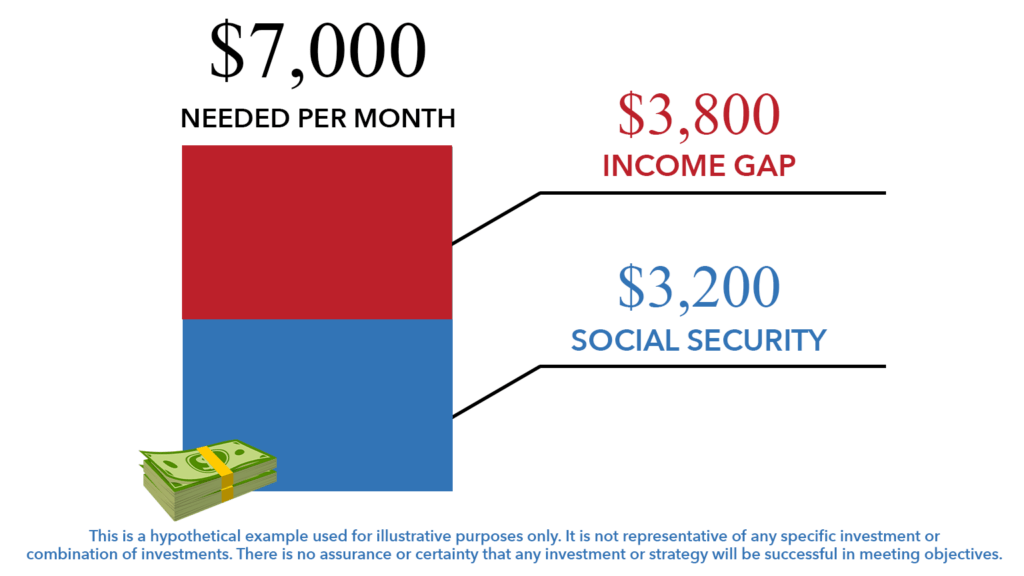
That gap does not necessarily mean you cannot afford your desired lifestyle. It means you need a strategy for where the additional $3,800 will come from.
Loren described a similar conversation with a family who initially viewed their income gap as a reason to cut spending. “I said, ‘No, that’s where the investment strategy becomes a part of this. You’ve saved really well for retirement. Now you just need to think about how do we use your investments to deliver that shortfall each month to ensure that you’re doing the things that you want to do from a lifestyle perspective.’”
The portfolio they spent years building can now become one of the sources used to fill that gap.
Why the Order of Withdrawals Can Matter
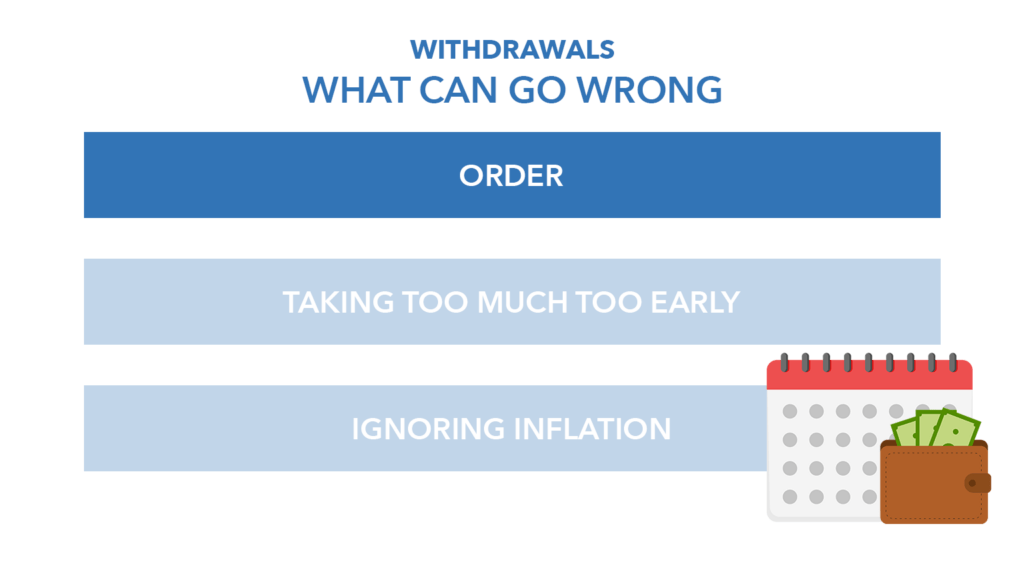
Once you know how much your portfolio needs to provide, another question emerges: Which account should the money come from first?
You might have money in a pre-tax 401(k) or IRA, Roth accounts, after-tax investments and cash in the bank. Each can potentially provide retirement income, but withdrawals from different accounts can have different tax consequences.
Simply defaulting to the same account every month can overlook opportunities elsewhere in the plan.
As Clint explains, “That may be your best strategy, but if you have some other options, that means flexibility, and it could mean a whole lot of positive implications if you really prioritize and create the right order for you.”
That order can also change over time. An income strategy that makes sense during the first few years of retirement may not be the strategy you use later.
A $7,000 Lifestyle May Eventually Cost $12,600
Planning for today’s expenses is not enough when retirement could last 20 or 30 years.
Using a hypothetical 3% inflation rate, the $7,000 monthly lifestyle in the earlier example could cost approximately $12,600 per month 20 years into retirement.
That means your retirement paycheck may need to grow along with your expenses.
Inflation can also affect individual spending categories differently. Health care is an important example. Clint notes that health care expenses have historically increased faster than the 3% inflation assumption used in many of the show’s hypothetical examples, potentially closer to the 5% to 6% range.
The impact is easy to overlook because it happens gradually. But a retirement income strategy designed only around today’s expenses may look very different decades from now.
Loren points out another challenge: “Can we really spend what we think we can early in retirement, knowing that our expenses are likely to continue to go up?”
Answering that question requires looking beyond the first few years of retirement.
Required Minimum Distributions Can Change the Picture
Taxes add another layer to the retirement income equation.
People who have accumulated significant balances in pre-tax retirement accounts may eventually be required to withdraw money through required minimum distributions, or RMDs. Depending on age, those distributions generally begin at age 73 or 75.
That can create a tax bill later in retirement, particularly for someone who has spent decades accumulating a large amount of pre-tax savings.
Loren explains the planning opportunity this way: “The question is whether they do it on their terms or whether they let it play out on the IRS’s.”
Thinking about future RMDs before they begin can help retirement income and tax strategies work together instead of treating them as separate decisions.
Give Every Retirement Dollar a Job
One approach to organizing retirement savings is to stop viewing the portfolio as one large pool of money and instead assign different portions of it different jobs.
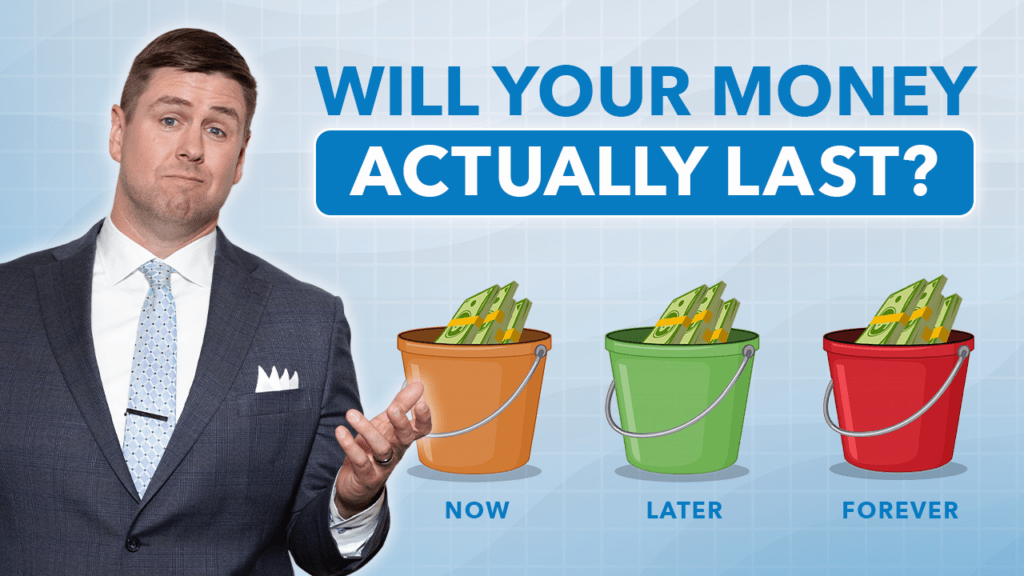
That is the idea behind the now, later, and forever bucket strategy.
Each bucket has a different time horizon and purpose. Together, they can help determine which money is intended to support today’s lifestyle, which money may be needed several years from now and which assets have more time to pursue long-term growth.
The Now Bucket: Money for the Next Two Years
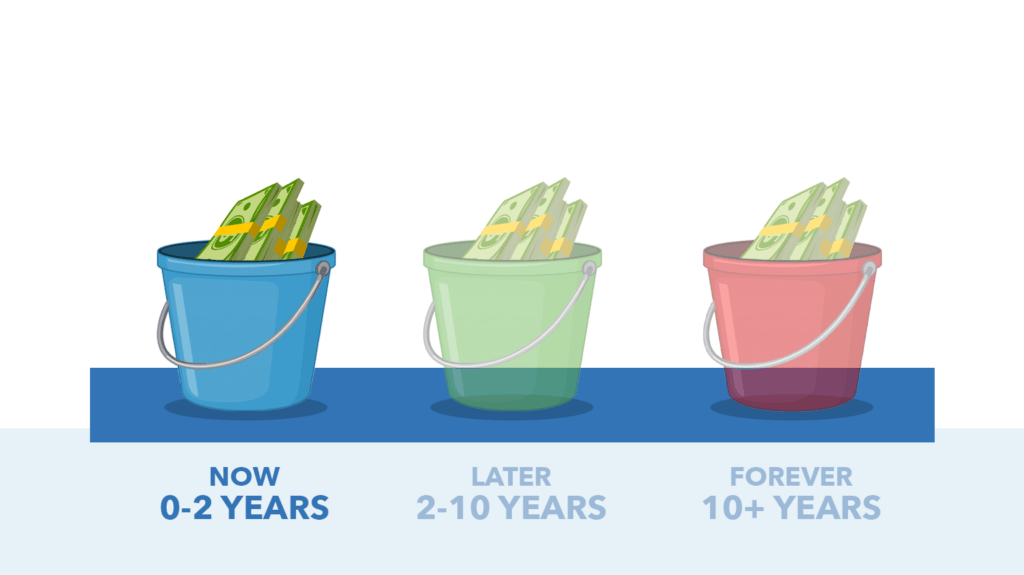
The now bucket is designed for money that may be needed relatively soon, generally during the first zero to two years.
Because this money is intended to help provide the retirement paycheck, the emphasis is on liquidity and protection from market volatility.
Clint explains, “This particular portion of the portfolio will be insulated from the volatility in the market so we know we can count on it in a dependable way in retirement.”
That protection can become especially important when markets decline.
Consider 2022, when the stock market fell about 20%. Someone who needed to sell investments during that decline to pay monthly expenses could have faced a difficult decision. A now bucket can provide another source for near-term spending so longer-term investments have time to recover.
For many retirees, distributions from this bucket can be deposited directly into a bank account each month, recreating some of the rhythm of receiving a paycheck while working.
The Later Bucket: Replenishing the Income Supply
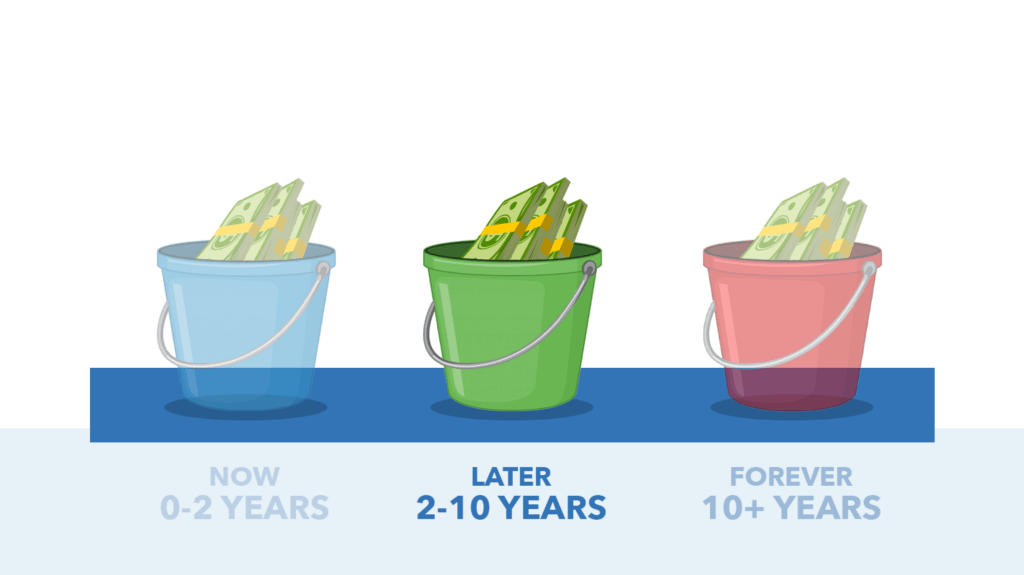
The later bucket is generally intended for money that may not be needed for approximately two to 10 years.
Because the time horizon is longer, this bucket may include bonds, fixed-income strategies, and other investments designed to balance growth opportunities with protection against market volatility.
It may also be used to help replenish the now bucket over time.
As Loren explains, “So you need to take some money from this later bucket, replenish the now bucket so you can continuously have that zero to two year timeframe of income in the now bucket.”
Instead of waiting until the now bucket is empty and then deciding what to sell, the strategy creates a framework for how money can move through the portfolio over time.
The Forever Bucket: Planning 10-Plus Years Ahead
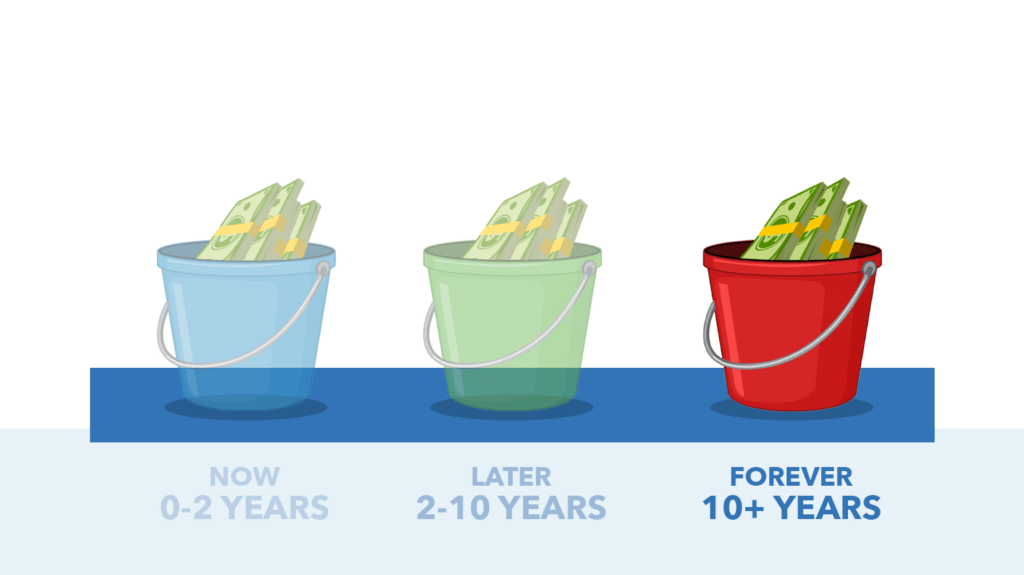
The forever bucket has the longest time horizon, generally 10 years or more.
Because this money is not expected to be needed immediately, the portfolio may have more opportunity to include growth-oriented investments, depending on the individual’s risk tolerance and overall plan.
The forever bucket may eventually replenish the later bucket, which in turn may replenish the now bucket.
Loren describes it as a waterfall: “So you continuously fill up these buckets with the bucket beyond it, and that’s why they’re invested differently, different time horizon, different type of investment strategies.”
The forever bucket may also support long-term legacy goals. And because it has more time to grow, it can play an important role in addressing the effect inflation may have on expenses later in retirement.
Five Steps for Thinking About Retirement Income
A retirement income strategy starts with understanding what you need and what resources you already have.
1. Know your lifestyle number. Estimate what you expect to spend each month and consider additional goals such as travel, hobbies, and other larger expenses. The number does not have to be perfect. It can change as your retirement changes.
2. Inventory income. Identify expected income from sources such as Social Security and pensions. Consider not only how much you may receive, but when each income source will begin.
3. Calculate the income gap. Subtract guaranteed monthly income from your expected monthly spending. The difference is the amount that may need to come from investments or other assets.
4. Develop a withdrawal strategy. Consider which accounts will provide that additional income and in what order. Taxes, market conditions, future RMDs, and the purpose of each account can all factor into the decision.
5. Review the strategy over time. Retirement at 55 can look very different from retirement at 85. Expenses, health care needs, tax laws, investment markets, and personal priorities can all change.
As Clint says, “It doesn’t have to start perfect, but the closer you get to reality, the less surprises it’s going to be for you and the easier creating that income plan is going to be.”
Retirement Income Connects to the Rest of Your Plan
Income does not operate independently from the rest of retirement planning.
The amount you withdraw and the account you withdraw it from can affect taxes. Investment decisions can affect the reliability of future income. Income can influence health care and Medicare premiums. The assets you spend or preserve can also affect a legacy plan.
That interconnectedness becomes increasingly important as retirement gets closer.
While saving for retirement can involve broad goals such as contributing regularly to a 401(k) or IRA, creating retirement income requires more specific decisions about how those accumulated dollars will actually be used.
The goal is not simply to reach retirement with a large account balance. It is to give those savings a purpose, providing income today, preparing for expenses years from now and helping position your savings to support your retirement lifestyle over time.
—
Watch the full episode on YouTube and learn more about turning a retirement nest egg into an income strategy designed to last.