Rethinking Your IRA Strategy

As retirement approaches, it’s essential to rethink your strategy for handling your Individual Retirement Account (IRA). With a focus on maximizing benefits and minimizing taxes, this blog will help you navigate the complexities of IRAs, understand their evolution, and leverage effective strategies like Roth conversions and Qualified Charitable Distributions (QCDs). We discuss important IRA rules and strategies that could help you make the most of your IRA as you near retirement.

–––––––––––––––––––––––––––––––––––––––––––––––––––––––––––––––––––––––––––––––––––––––––––––

Rethinking Your IRA

The Evolution of IRAs

IRAs have been a staple of retirement planning since their introduction in 1974. At first, they were only available at banks, and only workers without access to a pension could contribute.  

In 1974, the contribution limit per year was $1,500. From 1982 through 2001, that amount remained unchanged. Legislation passed in 2001 that indexed the contribution limit for inflation, starting the following year. The contribution limit has climbed to $7,000 for those under age 50 for 2025 and $8,000 for those age 50 or older.

Understanding IRA Taxes

One often overlooked aspect of a pre-tax or traditional IRA is that they include a future tax liability. Think of it as a deal you made with the IRS: you were able to deduct the contributions from taxable income in the year they were made, but when you start taking distributions from the account, you must pay that tax bill – on both the contributions and the growth.

Roth Conversions: A Tax-Efficient Strategy

A Roth conversion involves transferring pre-tax IRA funds into a Roth IRA. Although you pay taxes on the converted amount in the year of the conversion, the funds then grow tax-free and qualified distributions can be taken tax-free in retirement. 

For some, a long-term tax strategy, such as converting to a Roth IRA, can drastically reduce your retirement tax bill.

Qualified Charitable Distributions (QCDs)

For those aged 70½ or older, Qualified Charitable Distributions (QCDs) can be used to reduce taxable income while supporting charitable causes. Essentially, a QCD allows you to transfer funds directly from your IRA to a qualified charity without paying taxes on the distributed amount. 

This can also fulfill all or part of your Required Minimum Distribution (RMD). By integrating QCDs into your strategy, you can reduce your taxable income and meet charitable goals simultaneously. 

The annual QCD limit is $108,000 in 2025.

Building a Recession-Resistant Portfolio

Sequence of returns risk is a significant concern for pre-retirees who will soon depend on their retirement savings for income. 

Market downturns early in retirement can negatively impact your portfolio. In this episode, Loren discusses the importance of building a recession-resistant portfolio to protect your retirement savings from market swings.

The Comprehensive Retirement Plan

Retirement isn’t just about managing IRAs and minimizing taxes. A comprehensive plan should include six essential pillars of retirement: lifestyle, income, taxes, investments, health care, and legacy. Your journey to retirement should include a well-rounded approach.

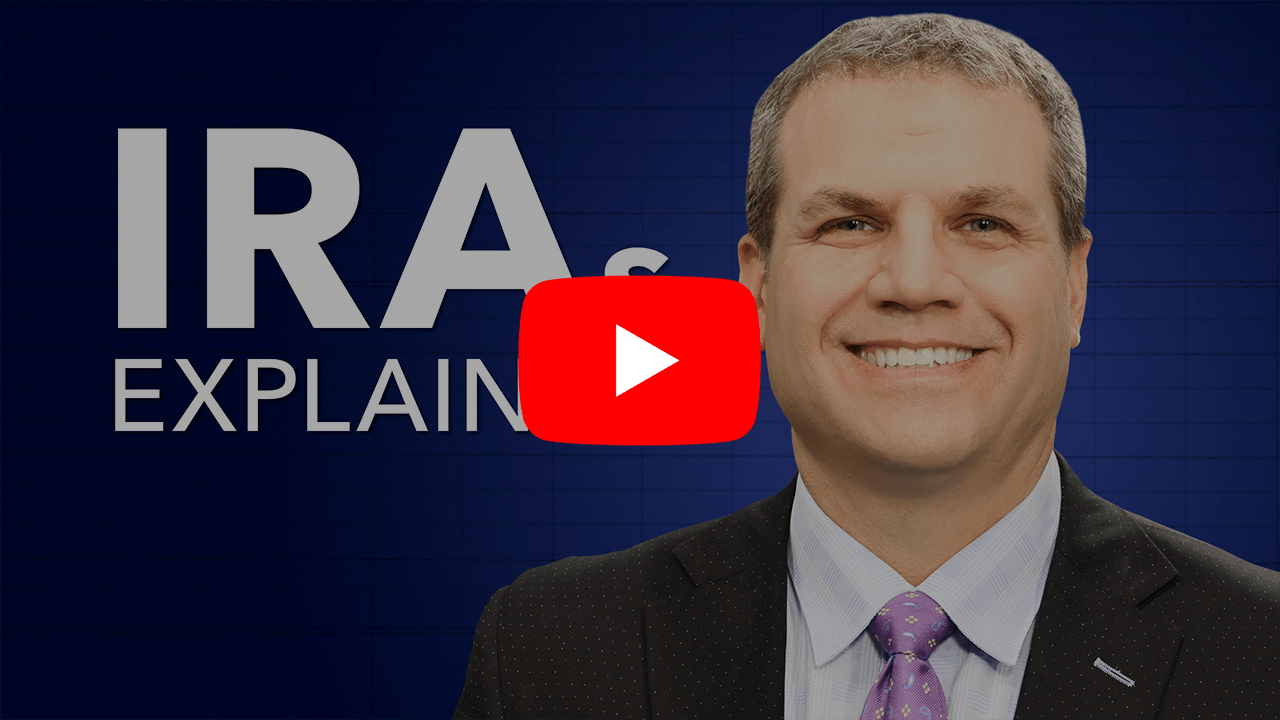
Click here to watch the full episode “Rethinking Your IRA” on YouTube!

Source: Investopedia.com

FOLLOW US ON SOCIAL

Visual-Insights-Newsletter-Ad_v2

Sign-up for our Visual Insights Newsletter for the latest retirement information and strategies – straight to your inbox.

  • This field is for validation purposes and should be left unchanged.

Discover more strategies you could be missing out on

Retirement Planner vs. Financial Advisor: What’s the Difference?

As retirement gets closer, the financial guidance you need may change. Understanding the difference between investment-focused advice and comprehensive retirement planning can help you identify whether your current approach addresses income, taxes, Social Security, health care, investments, lifestyle, and legacy. — For decades, much of your financial life may have centered on one goal: saving and investing for the…

Read More...
man standing next to buckets with a puzzled look on his face.

Will Your Money Last as Long as You Do?

Saving enough for retirement is only part of the equation. Learn how identifying your income gap, planning for inflation and taxes, and dividing savings into now, later, and forever buckets can help turn a retirement nest egg into an income strategy designed to last.  Saving $1 Million Is Different From Having a Plan Reaching a retirement savings goal can feel like…

Read More...
man standing in front of two market charts looking serious.

6 Money Moves for Market Swings

Market volatility is inevitable, but it does not have to derail your retirement plans. These six retirement planning moves can help you prepare for market swings, protect your retirement income, manage investment risk, uncover potential tax opportunities, and take advantage of market downturns.  — Market swings can feel very different when retirement is getting closer.  While you are working…

Read More...
man standing next to an illustration of a piggy bank, cash, and a calendar with the phrase, "Inherited and IRA? Now What?" over him.

Inherited an IRA? Here’s How to Avoid Costly Tax Mistakes

Inheriting an IRA can create new opportunities, but it also comes with important tax rules and deadlines. Learn what has changed, the options available, and how to make thoughtful decisions that fit your retirement plan.  Inheriting an IRA Can Change Your Retirement Plan Receiving an IRA from a parent, grandparent, or other loved one can be…

Read More...
woman standing next to text with red x marks floating around.

8 Ways People Can Run Short on Money in Retirement — And How to Help Avoid Them

Retirement comes with opportunities, but it also brings financial risks that can catch people off guard. Learn eight common reasons retirees can run short on money and practical planning strategies that may help you prepare for a more confident retirement.  Retirement should be a time to enjoy the lifestyle you’ve worked hard to build. Yet many retirees…

Read More...
Man standing nect to a chart that reads, "balance: $1,000,000".

Should You Do a Roth Conversion with a Million-Dollar IRA? 

Many retirees are surprised to learn that a large IRA balance can create a significant tax bill later in retirement. This blog explores how Roth conversions work, why taxes may become one of your biggest retirement expenses, and how a proactive tax strategy could help reduce the lifetime taxes you pay while creating more flexibility…

Read More...

Ready to take your retirement to the next level?

Let's chat! Schedule a RetireReady Call to talk with a retirement planner about your retirement vision.

Ready to take your retirement to the next level?

Let's chat! Schedule a RetireReady Call to talk with a retirement planner about your retirement vision.

Call Now Button