Loneliness is rising among adults over 45, and it can have a powerful impact on health, happiness, and fulfillment in retirement. Here’s what recent research reveals—and how thoughtful retirement planning could help protect connection and purpose in the years ahead.
Loneliness Is Rising—And Often Unspoken
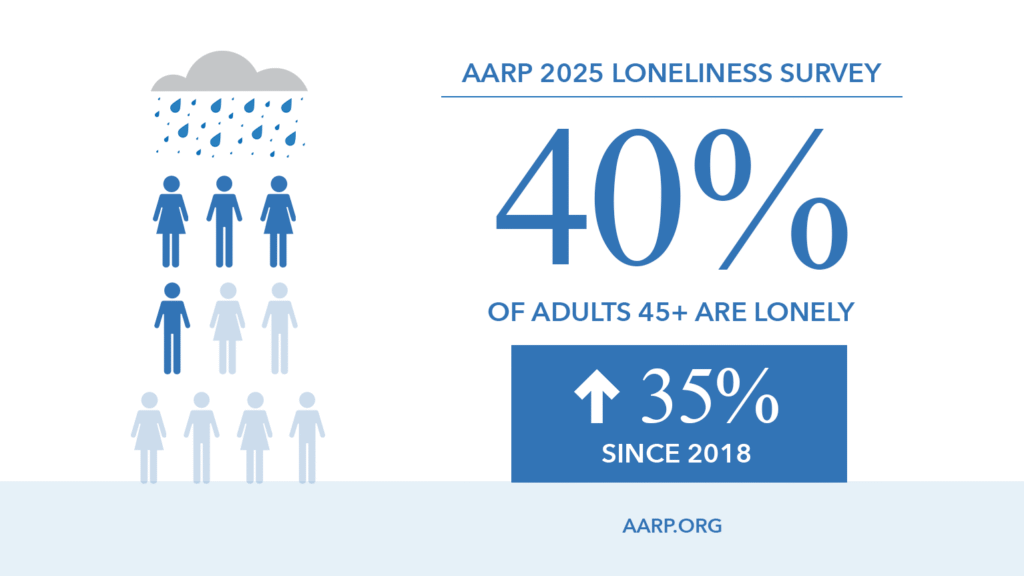
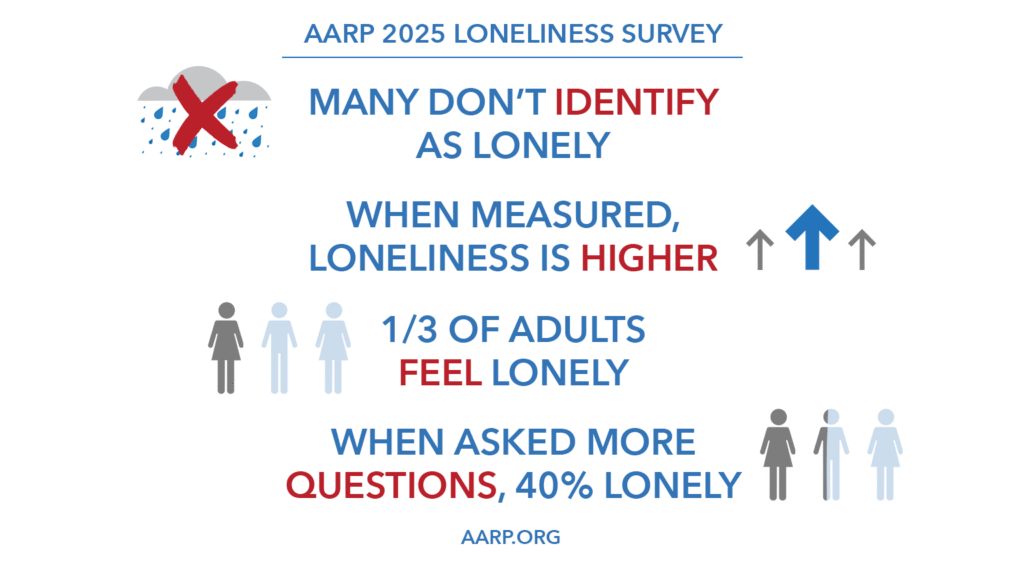
A recent AARP study found that 40% of adults age 45+ meet the criteria for loneliness. That’s up from 35% in 2018 and the highest level since the survey began in 2010.
The survey included about 3,300 Americans.
Yet many people would never describe themselves as lonely.
Director of Medicare & Long-Term Care AnnaMarie Morrow, says the families and individuals she meets with rarely use the word loneliness. “They don’t necessarily use that word loneliness, but there is a real concern of what am I going to spend my time doing?”
For many, the feeling shows up as boredom or uncertainty—an uneasiness about what comes next.
The Transition No One Talks About
Retirement Planner Loren Merkle has been helping people plan for retirement for more than 20 years. He says the shift from working life to retirement is one of the biggest emotional transitions people face.
“You’re going through a lot of transitions,” Loren says. “You’re going from transitions of the kids getting out of the house, being on their own… you feel a lot more alone because of that. And you have way more downtime than what you’ve ever had before.”
And once work ends, the rhythm of life changes dramatically.
“Especially once you make that final leap into retirement and now you don’t have to drive to work every Monday morning,” he says. “So, there’s a lot of emotions that go into this, and loneliness, I would say, is at the top of this emotion list.”
The working years come with built-in structure. Retirement does not.
“Oftentimes there’s not as much activity that just happens to us,” Loren explains. “The activity is now more incumbent upon you to define and to make sure that you put in your life.”
Why Loneliness Is Underreported
There’s also stigma attached to the word itself.
“When you ask somebody, are you lonely… do you want to say yes?” Loren asks. “Subconsciously, you might have all the feelings that are associated with loneliness, but it hasn’t bubbled up to the surface in a way that you can, one, understand it, or two, even want to talk about it or be able to talk about it.”
That gap between perception and measurement showed up clearly in the study. While about one-third of adults say they feel lonely, more detailed questions reveal that closer to 40% meet the criteria.
The takeaway: loneliness can be subtle—and easy to miss.
Retirement Planning Starts With Lifestyle
At Merkle Retirement Planning, the first conversation isn’t about investments or a 401(k). It’s about life.
“This is why it’s the first question we ask when we sit down with couples or individuals for the first time,” AnnaMarie says. “The first question we ask is not, oh, what are you invested in? Or what do you want to invest in? It’s what do you see yourself doing in retirement?”
That answer becomes the foundation for everything else.
“When we say we do comprehensive planning, we mean we’re comprehensive retirement planners,” Loren says. “The lifestyle is where we have to start because you can have all of the money in the world. It’s not going to bring you fulfillment or joy like you thought it was when you were disciplined and sacrificing and putting this money away if you don’t have a more redefined purpose.”
He puts it plainly: “You have to refine what that purpose is in order to really be able to enjoy the hard, disciplined sacrifices you’ve made for the last 40 years.”
Purpose, Health, and the Sunday Effect
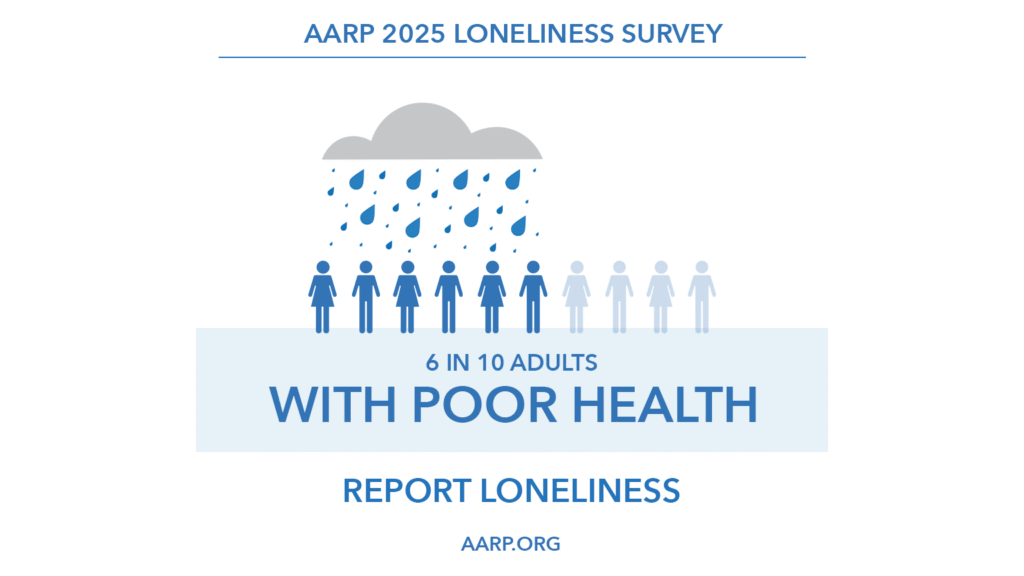
The study also found that nearly 6 in 10 adults with poor physical or mental health report loneliness. The relationship works both ways—loneliness affects health, and health affects loneliness.
“There certainly is a correlation between the mental health and the physical health,” Loren says. “If you have better mental health and you feel more purpose around your day and you’re excited to get up to go through the next day and all the adventures that take place, your physical health will follow.”
AnnaMarie recalls a couple who retired around the same time. The husband had been especially concerned about how he would fill his days. A year later, his perspective had changed dramatically.
“He no longer was scared on Sunday afternoons,” she says. Instead of dreading Monday, he was enjoying football games, time with grandchildren, and new routines that developed gradually over the first year.
Retirement didn’t transform overnight. It evolved—and with it, his sense of purpose.
The Power of Shared Experience
Over time, Loren has noticed that connection often grows when people realize they’re not alone in their concerns. Merkle Retirement Planning hosts monthly Lifestyle events ranging from pickleball and painting classes to tours of the Capitol and a trip to Reiman Gardens in Ames.
“One of the things I really like about these events is… we get a group of people together and they talk with each other,” he says. “They start having a conversation… they are going through the same thing that I’m going through. They have the same concerns.”
Those conversations often turn into lasting friendships. “Those connections… they just happen. And it’s very organic,” Loren says.
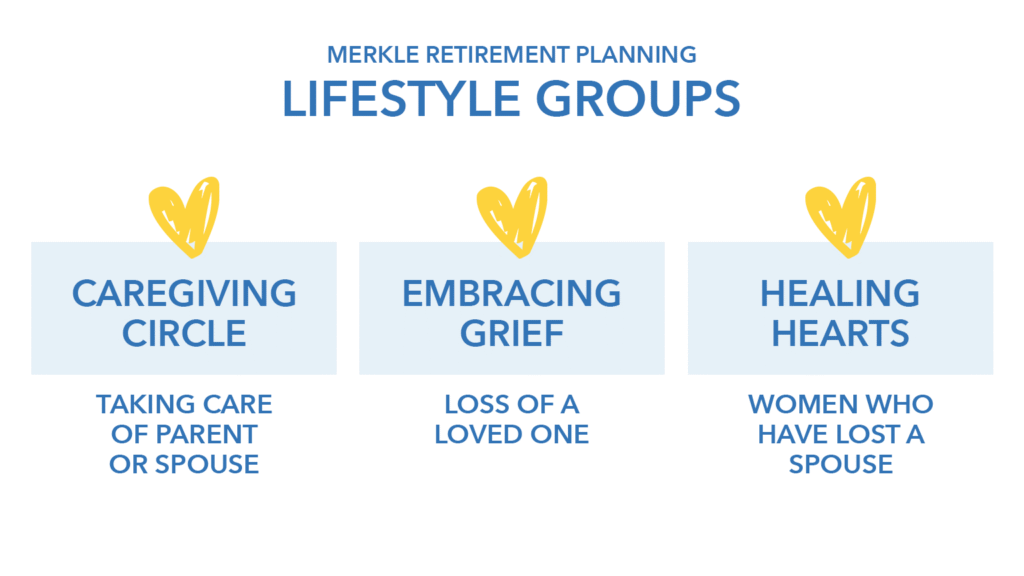
Merkle Retirement Planning has also created structured groups for those navigating caregiving, grief, or widowhood. The goal is simple: bring people in similar situations together so they can talk openly and support one another.
Technology: Helpful, But Not Enough
The AARP study found that 53% say social media helps them stay in touch—but 59% say online communication makes them feel lonelier.
AnnaMarie recently met with a woman preparing for retirement who voiced a concern many people quietly share.
“The first thing she said to me was, I’m nervous I’m going to be on my phone all day long,” AnnaMarie recalls.
Awareness is a good first step. But connection, like financial security, rarely happens by accident.
Plan for Connection—Not Just Income
Retirement planning is often thought of in financial terms: income, taxes, investments, health care, legacy. Those pillars matter. But they exist to support something bigger.
“The lifestyle are the dreams,” Loren says. “It’s the things that you’re thinking about, the fun stuff… but it also involves the not so fun stuff. It’s life, good and bad.”
He believes the difference between hoping for a fulfilling retirement and actually experiencing one comes down to intention.
“If you leave it to chance, there is a chance that you could find that emotional connectivity,” Loren says. “But if you plan for it, there’s a lot higher probability that you will have the retirement that you wanted to, not only financially but also from a lifestyle standpoint.”
Loneliness may be common. But with awareness, purpose, and thoughtful planning, retirement can become a season defined not by isolation—but by connection.
Watch the full episode on YouTube and learn more about thoughtful retirement planning and how they could help protect connection and purpose in the years ahead.
Source: AARP.org