As retirement approaches, the decisions and strategies required to achieve a comfortable and secure retirement become more complex than most anticipate. Retirement Planners Loren Merkle and Clint Huntrods highlight a critical reality: there are a handful of common investment traps that can jeopardize your retirement goals if not navigated thoughtfully.
–––––––––––––––––––––––––––––––––––––––––––––––––––––––––––––––––––––––––––––––––––––––––––––
Let’s break down three of the pitfalls facing pre-retirees and explore practical strategies to help you avoid these retirement investment traps.
Trap #1: Investment Hyper Focus
Throughout your working years, much of your financial attention is likely focused on investments: how much to contribute, tracking the value of 401(k)s, monitoring market swings, and comparing your returns to major indices like the S&P 500 or the Dow Jones Industrial Average. As you approach retirement, it’s natural to become even more fixated on your portfolio.
Loren points out that while comparing your investments to market indices can be tempting, it’s not always meaningful—or even relevant—for most retirement portfolios. The S&P 500, for example, delivered outsized returns in recent years largely due to a handful of tech giants. If your portfolio mirrors those gains, it may actually signal a lack of diversification, which can expose you to heightened risk.
True retirement planning is about more than just chasing investment returns. A diversified portfolio, tailored to your unique risk tolerance and goals, is essential as you approach retirement. A hyper focus on investments can keep you from seeing the bigger picture: the need for a solid plan that addresses lifestyle, income, taxes, health care, and legacy planning—not just market performance.
We refer to the plans we help families and individuals create as a RetireSecure Roadmap: a comprehensive plan that covers the six essential pillars of retirement.

Trap #2: Taking Unintended Risks
The concept of investment risk transforms as you near retirement. During your 30s or 40s, experiencing a big dip in your portfolio feels less urgent—you have time to recover. But if you’re in your early 60s, and hoping to retire soon, a major market downturn can derail your plans completely.
Loren and Clint emphasize that most people have not assessed their portfolio’s risk exposure in years, and terms like “moderate” or “aggressive” are highly subjective. What matters is understanding, in clear terms, how much your portfolio could drop during a downturn and whether you’re comfortable with that potential loss.
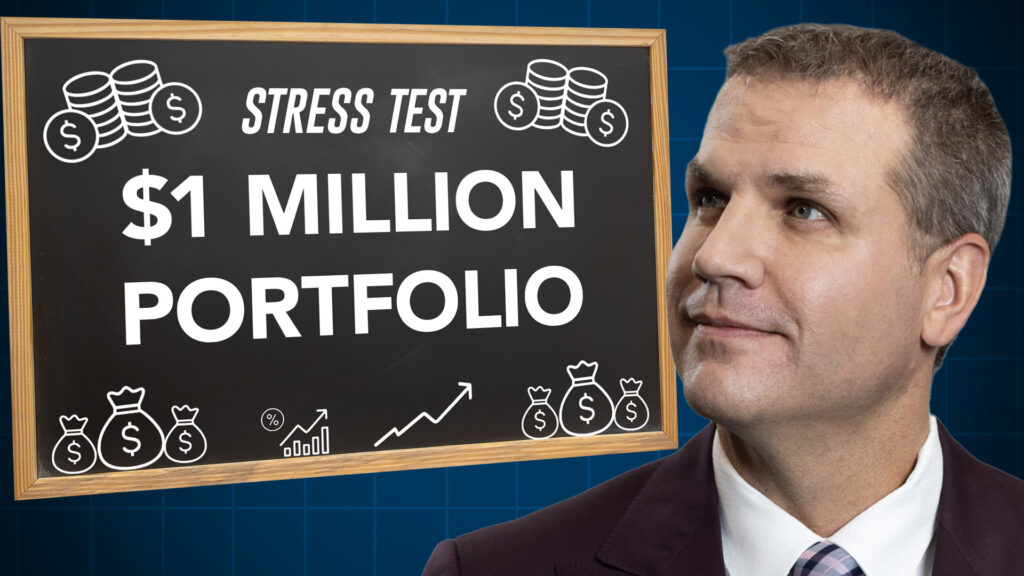
Traditional risk questionnaires can be vague or misleading. Instead, a robust approach involves calculating what a sudden market drop would mean for your actual nest egg. Would seeing a $300,000 drop in a $1 million portfolio still allow you to live the lifestyle you want to in retirement? Clarity on this front is essential for designing a retirement portfolio that lines up with both your goals and your peace of mind.
It’s also important to recognize that unintended risk can come from being too conservative as well as too aggressive. Some individuals, after years of market volatility, might hold too much in cash or low-yield assets—potentially failing to keep pace with inflation and taxation.
Trap #3: Making Unrealistic Return Assumptions
Growth assumptions are often the biggest “blind spot” in retirement planning. Many calculators or advisors use optimistic average return projections—sometimes in the 10-12% range—which rarely reflect the composition or objectives of most retirement portfolios. As Clint explains, a $500,000 portfolio growing at 12% for 20 years yields nearly $5 million.

Drop that return to 6%, and the result is closer to $1.6 million—a huge difference.

The risk? Believing higher numbers could lead to overspending, purchasing major assets without consideration for potential downturns, or simply underestimating the impact of taxes and inflation on your nest egg. Historical downturns and recessions are an expected part of long-term investing; building a plan around the rosiest of scenarios can set up devastating shortfalls.
Loren and Clint recommend creating plans with conservative return assumptions, often below the “target” return for your expected risk level. Starting with your desired lifestyle, they work backward to determine required portfolio returns. If reality outperforms those conservative assumptions, it leaves room for additional spending or a lasting legacy for heirs—rather than an unpleasant surprise.
A Broader Perspective — And a Personalized Plan
What separates retirement planning from simple investment management is the recognition that your needs are unique and that a comprehensive strategy goes far beyond portfolio returns. Understanding your retirement lifestyle needs, income planning, tax efficiency, health care planning, and a strategy for your legacy are all pillars that matter just as much as your investment choices.
As you stand at the threshold of retirement, take stock—not just of your balances and recent market performance, but of the entire framework supporting your financial future. Avoiding these three traps—hyper focus on investments, unintended risk, and unrealistic return assumptions—can help pave the way for a retirement that is both confident and resilient.